


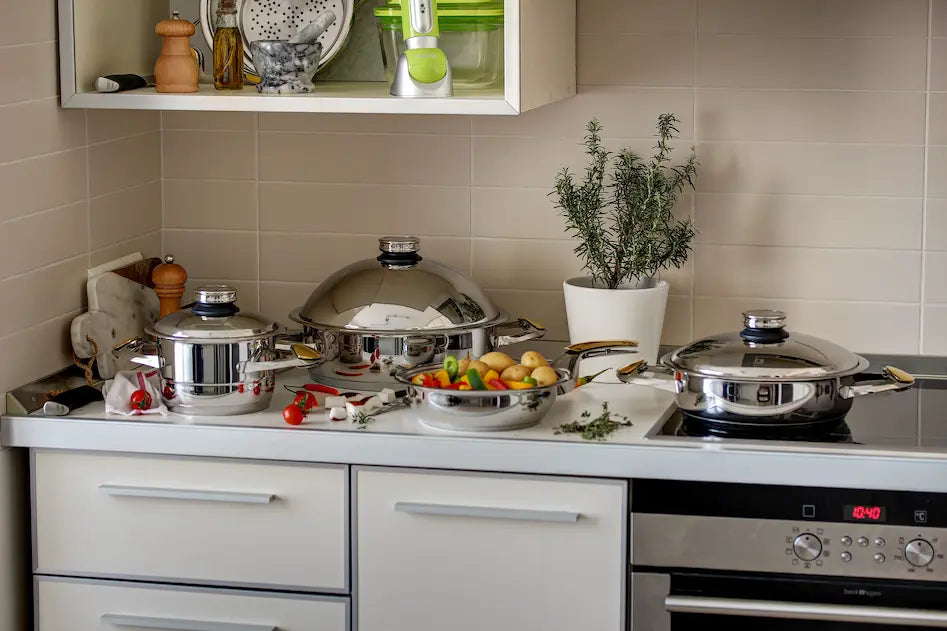


Stainless Frying Pans NZ: Everyday Frying with MasterPiece Cookware

Quick answer: Stainless frying pans are a strong choice for NZ kitchens when you want a durable pan for searing, browning, sautéing and everyday frying. Choose a pan with a heavy, stable base, comfortable handle, induction compatibility if needed, and clear care guidance. For an easy starting point, explore our frying pans collection and the wider MasterPiece cookware collection.
Stainless frying pans suit cooks who want a pan that can do more than gentle low-heat cooking. They can handle higher heat, build flavour on the surface of meat and vegetables, and move from weeknight meals to more precise cooking techniques as your confidence grows.
At Cookwares, we recommend thinking about a stainless frying pan as a long-term kitchen tool rather than a quick replacement item. The right pan should feel balanced in your hand, sit flat on your cooktop, heat evenly and clean up reliably with the right method. That is the practical reason we often guide new buyers toward quality construction and the MasterPiece cookware range.
What is a stainless frying pan?
A stainless frying pan is a shallow, wide pan made with stainless steel as the cooking surface or main body material. Many quality pans use a layered base or multi-ply body, often combining stainless steel with a conductive core so heat spreads more evenly across the pan.
For NZ buyers, the main appeal is versatility. A stainless pan can brown chicken, sauté onions, fry mushrooms, finish a sauce and handle regular use without relying on a soft non-stick coating. It is not automatically non-stick, so technique matters, but that learning curve is also what gives stainless steel its crisp searing and browning advantage.
Why choose stainless frying pans?
We see stainless frying pans as a smart option for cooks who want control, durability and a clean cooking surface. Stainless steel resists rust and staining when cared for properly, does not need the same coating protection as conventional non-stick pans, and is well suited to high-contact cooking where browning matters.
Best uses
Use a stainless frying pan for searing steak, browning chicken, frying halloumi, sautéing vegetables, cooking mushrooms, reducing pan sauces and making dishes where you want caramelisation. A pan with enough surface area also helps moisture evaporate quickly, which is important when you want crisp edges rather than steaming.
Where non-stick may still be easier
Delicate eggs, very soft fish and low-fat cooking can be easier in a non-stick pan, especially for beginners. That does not make stainless steel a poor choice. It simply means the pan should match the task. Many NZ kitchens work best with one quality stainless frying pan for browning and one gentle-release pan for delicate foods.
What to look for before buying
Start with construction. A thin pan may heat quickly, but it can also create hot spots. A heavier base or layered design usually gives better stability and more predictable cooking. If you cook on induction, check that the pan is induction compatible before buying.
Next, think about size. A 24 cm pan is useful for one to two people, omelettes, smaller portions and side dishes. A 28 cm pan gives more room for family meals and better browning when ingredients need space. Crowding the pan traps steam, so a slightly larger surface can make a real difference.
Handle feel is just as important. Look for a secure handle that feels comfortable when the pan is empty and manageable when it is full. If you want to finish dishes in the oven, confirm the exact oven-safe temperature for the pan and lid before use, because handle and lid materials can change the limit.
How to cook with stainless steel without sticking
Most sticking problems come from heat timing rather than the material itself. Preheat the empty pan over medium heat, add oil once the pan is warm, then add food when the oil shimmers. If the food is protein-rich, let it sit long enough to form a browned surface before you try to move it.
Food often releases naturally once browning has developed. If you scrape too early, it can tear or leave residue behind. Reduce the heat if oil smokes or the pan becomes too hot. Stainless steel rewards steady heat more than aggressive heat.
A simple stainless pan method
Dry the food first, especially meat, tofu and vegetables with high moisture. Warm the pan, add oil, place food in a single layer, then give it time. For pan sauces, use the browned bits on the surface by adding liquid and loosening them with a wooden or silicone utensil.
Care and cleaning tips
Let the pan cool before washing, because sudden temperature changes can affect the base over time. Wash with warm water, dish liquid and a non-abrasive sponge. For stuck-on food, soak the pan briefly, then loosen residue gently. For white mineral marks or rainbow tinting, a small amount of vinegar or a stainless steel cleaner can help, followed by a thorough rinse.
Avoid using harsh metal scouring as a daily habit. Stainless steel is durable, but keeping the surface smooth makes cooking and cleaning easier. Dry the pan after washing to reduce water spots, especially in hard-water areas.
Stainless steel vs non-stick for frying
Choose stainless steel when you want browning, higher heat tolerance, sauce building and long service life. Choose non-stick when you want easy release for eggs, pancakes or very delicate foods. The best choice is not one material for every job. It is the right pan for the way you actually cook.
For new buyers, we usually suggest starting with a quality stainless frying pan if you cook meat, vegetables, stir-fries or one-pan meals often. It gives you more technique headroom as your cooking improves and fits well with the broader MasterPiece cookware approach to durable kitchen tools.
FAQs
Are stainless steel frying pans any good?
Yes, stainless steel frying pans are good for browning, searing, sautéing and everyday frying when you use the right heat and enough cooking fat. They are durable, versatile and a strong choice if you want a pan that can handle regular NZ kitchen use.
What foods should not be cooked in a stainless steel pan?
There are few absolute no-go foods, but very delicate eggs, thin fish fillets and low-fat sticky batters can be harder for beginners. Stainless steel is best for foods that benefit from browning, while delicate foods may be easier in a gentle-release pan.
Is it better to fry in stainless steel or nonstick?
Stainless steel is better for searing, browning and building pan sauces. Non-stick is easier for eggs, pancakes and delicate foods. We recommend choosing based on the dish rather than expecting one pan type to do everything best.
Do chefs use non-stick or stainless steel?
Many chefs use stainless steel for browning, searing and sauce work, and may also use non-stick for delicate items such as eggs or fish. In home kitchens, the same approach works well: stainless steel for flavour and control, non-stick for easy release.
Is stainless steel frying pan dishwasher-safe or does it need hand-washing?
Some stainless steel frying pans are labelled dishwasher-safe, but hand-washing is usually the gentler option. We recommend checking the product care instructions, then washing with warm soapy water and drying the pan well.
Is stainless steel frying pan oven-safe, and what temperatures should I watch for?
Many stainless steel frying pans are oven-safe, but the exact limit depends on the handle, lid and full product design. Always check the manufacturer temperature guidance before putting a pan or lid in the oven.
What should I look for when buying stainless steel frying pan?
Look for stable construction, even heat distribution, cooktop compatibility, a comfortable handle, the right size for your meals and clear care instructions. If you use induction, confirm induction compatibility before buying.
How do I choose the right size of stainless steel frying pan?
Choose around 24 cm for smaller households, sides and compact cooking. Choose around 28 cm when you cook for more people or want more space for browning. More surface area helps reduce crowding and steaming.
How long should good-quality stainless steel frying pan last?
A good-quality stainless steel frying pan can last for many years when used and cleaned properly. Lifespan depends on construction quality, heat habits, cleaning methods and whether the base remains flat.
How do I clean and care for stainless steel frying pan?
Let the pan cool, wash with warm soapy water and a non-abrasive sponge, soak stuck-on food before cleaning, then dry thoroughly. For mineral marks or rainbow tinting, use a small amount of vinegar or a suitable stainless steel cleaner.
Next steps
- Read our stainless steel pan NZ guide
- Compare stainless steel cookware options
- Explore stainless pots and pans for NZ kitchens
- Learn what type of pan is best for frying
- Review stainless steel pan safety considerations