


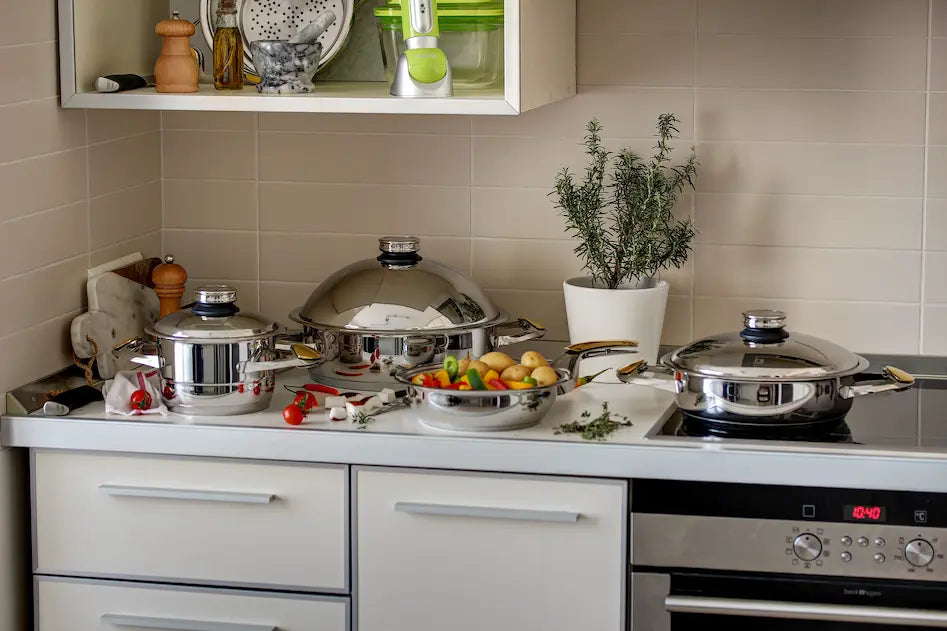


Induction ready cookware: how to check if your pots and pans will work

Quick answer: Induction ready cookware is any pot or pan with a magnetic, flat base that your induction cooktop can detect. If a fridge magnet sticks firmly to the bottom and the base sits flat, you are usually good to go.
If you are shopping for new pieces, start with our cookware sets for coordinated sizes, or browse a single everyday pan in our frying pans collection. If you want a simple non-stick option, see our non-stick URA pan with lid.
How induction cooking works in plain language
Induction cooktops heat the pan, not the glass. Under the glass are coils that create a magnetic field. When a compatible pan sits on the zone, the magnetic field induces electrical currents in the base and the metal heats up. If the base is not magnetic, the zone may not recognise the pan or it may heat weakly.
What to look for in induction ready cookware
1) A magnetic base
Cast iron is naturally induction friendly. Many stainless steel pans are induction compatible too, especially when they use a bonded base with a magnetic layer. Aluminium and copper usually need a magnetic plate bonded to the base to work on induction.
2) A flat, stable bottom
Induction zones need close contact between the pan and the glass for consistent heat. A warped base can cause poor detection, hot spots, or temperature cycling. If your pan rocks on the cooktop, it is worth replacing.
3) Enough base area for the zone
Each zone has a minimum detection size. A small milk pot can fail to register on some hobs even if it is magnetic. Match the pan base to the zone diameter for the most even results.
4) Weight and construction
Heavier cookware tends to heat more evenly and can reduce buzzing. Multi-layer bases can also improve heat spread, which is helpful for searing and for gentler simmering.
Pros and cons of induction ready cookware
- Pros: fast response, efficient heat transfer, cooler surrounding surface, good control for simmering and searing.
- Cons: not all cookware works, very lightweight pans can be noisy, warped bases cause problems, some zones have minimum size limits.
Induction symbols and labels you may see
Brands use a few different markings to show compatibility. The most common is a small coil icon. You might also see text like induction, induction compatible, or induction ready. When in doubt, the magnet test is still the simplest check.
- Coil icon: usually means the base is magnetic and designed for induction zones.
- All stovetops: often indicates the cookware works on gas, electric coil, ceramic, and induction.
- Base material notes: look for terms like magnetic stainless, ferritic stainless, or induction plate.
Magnet test, done properly
A quick magnet test is useful, but technique matters. Place a magnet in the centre of the base. A strong pull across a larger area is a good sign. If the magnet only sticks weakly at the edges, the pan might heat unevenly or the zone might not detect it consistently.
Also check the base thickness. Very thin bases can vibrate slightly on high power, which is one reason some pans buzz.
Choosing the right piece for common tasks
For everyday frying and eggs
A medium non-stick frypan is convenient, but induction cooktops can heat quickly. We recommend using medium heat, preheating briefly, and avoiding boost for delicate foods.
For sauces and rice
A saucepan with a snug lid helps reduce power cycling at low temperatures because the food stays hotter with less energy. A thicker base also helps prevent scorching.
For soups, pasta, and batch cooking
A larger pot benefits from a wide, flat base that matches your largest zone. If the base is smaller than the zone, the outer edges can lag behind, especially on lower cost cookware.
Care tips specific to induction cooktops
Because induction is fast, it is easy to overheat an empty pan. Put oil, butter, or food in early and adjust the setting as soon as you see the right sizzle. If you regularly use high power, look for cookware with a thicker base to reduce warping risk over time.
To protect the glass, keep both surfaces clean and dry. Salt crystals, sugar, or gritty residue can scratch if you slide cookware. If something boils over, wipe it up once the surface is cool.
How to choose induction cookware for your kitchen
Choose materials that suit what you cook
- Stainless steel: great all-rounder for browning and deglazing. Look for an induction symbol or a magnet-friendly base.
- Cast iron: excellent heat retention, ideal for steaks and roasts, but heavier to lift.
- Non-stick: handy for eggs and delicate fish. Prioritise a flat, sturdy base and moderate heat use.
Pick a core set first, then add specialist pieces
For most NZ kitchens we recommend starting with a medium frypan, a saucepan, and a larger pot. From there, add a larger frypan, a stockpot, or a steamer insert depending on your cooking style.
Check compatibility before you buy
Look for words like induction compatible, induction ready, or a coil symbol on the packaging. If you can, do the magnet test in-store. If you are still deciding, our guide on cookware for an induction cooktop goes deeper on matching cookware to different hob types.
Care and cleaning tips for induction cookware
- Keep the cooktop glass and pan base clean so grit does not scratch the surface.
- Lift pans instead of sliding, especially heavier cookware.
- Avoid overheating empty non-stick pans. Use medium heat and add oil or food early.
- For stainless steel, heat gradually and let pans cool before washing to reduce warping risk.
Common problems and quick fixes
The cooktop does not detect my pan
Try a different zone, then do the magnet test. If the base is small, the zone may not detect it. If the base is warped, the cooktop can lose contact and stop heating.
Heat seems to pulse on and off
Many induction cooktops pulse power at low settings. If it feels extreme, switch zones, use a heavier pan, or increase the setting slightly and control simmer with lid position.
The pan makes buzzing noises
Buzzing is more common with high power and lighter pans. A thicker, flatter base can help. Some noise can be normal, especially when using boost.
FAQs
What does induction ready cookware mean?
Induction ready cookware has a magnetic base that an induction cooktop can detect and heat. If a magnet sticks firmly to the bottom of the pan, it is usually induction ready.
How do I test if my cookware works on induction?
Do the magnet test on the base, then check for a flat bottom. If the pan rocks, has a warped base, or the magnet only sticks weakly at the edges, performance can be patchy.
Will stainless steel work on induction?
Many stainless steel pans work on induction, but not all. Induction needs magnetic stainless steel or a bonded magnetic layer in the base. Always check the induction symbol or do the magnet test.
Does non-stick cookware work on induction?
Some non-stick pans are induction compatible if they have a magnetic base. Non-stick by itself does not guarantee induction compatibility, so check the label and the base material.
Why does my induction cooktop make clicking or buzzing noises?
Light clicking can be normal as the hob pulses power to control heat. Buzzing is more common with thinner cookware or high power settings. Using heavier, flat-bottomed pans can reduce noise.
What size pan works best on an induction zone?
Use a pan with a base that closely matches the ring size so the cooktop can detect it properly and heat evenly. Very small bases may not be recognised on some zones.
Can induction cookware scratch a glass cooktop?
It can if grit is trapped under the pan or if you slide heavy cookware. Keep the glass clean, lift rather than drag, and avoid rough or damaged pan bases.
Next steps
- Cookware for an induction cooktop
- Induction hob cookware
- Induction range cookware
- Induction oven cookware
- Induction plate cookware
- Stainless steel cookware guide