


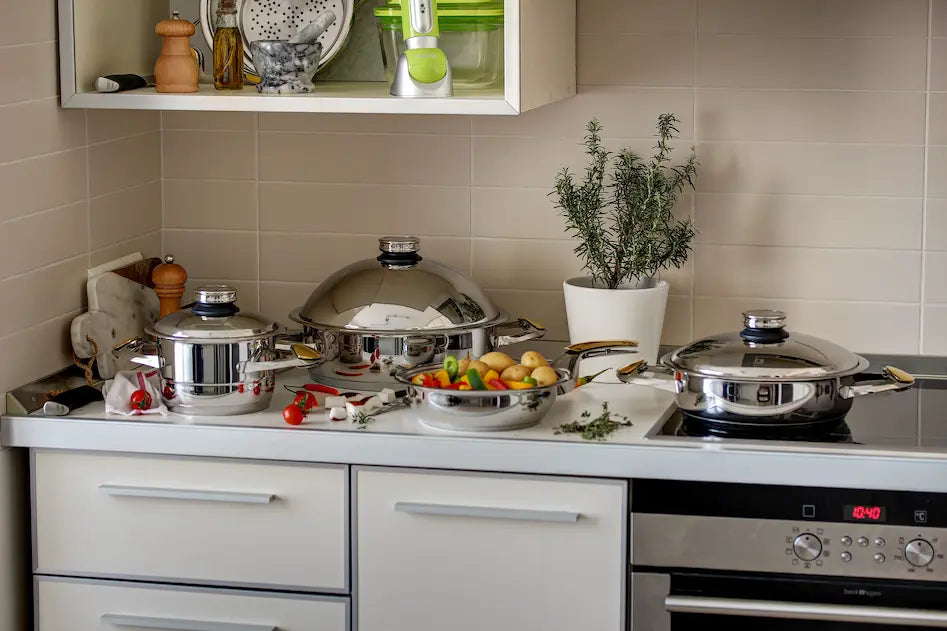


Induction range cookware: how to choose pots and pans that work on NZ induction cooktops

Quick answer: Induction range cookware is any pot or pan with a flat, magnetic base that an induction cooktop can detect and heat efficiently. Look for a ferromagnetic base (a magnet sticks), a stable flat bottom that matches your cooking zone, and materials like stainless steel or cast iron.
If you have moved to an induction range or induction cooktop, you have probably noticed one thing fast: not every pot and pan will heat up. Induction uses a magnetic field to heat the cookware itself, so choosing the right induction range cookware matters for performance, safety, and day to day ease.
In our Cookwares range, we focus on induction friendly designs with stable bases and materials that handle New Zealand kitchens, whether you cook every night or only on weekends. If you want a quick place to start, browse our induction cookware collection or explore the Masterpiece cookware collection.
What induction range cookware means
Induction range cookware simply means cookware that an induction hob can detect and heat. For that to happen, the base needs to contain ferromagnetic material, usually certain grades of stainless steel or cast iron. The base also needs to sit flat so the magnetic field couples efficiently.
Many modern pans use multi layer construction, for example stainless steel on the outside with an aluminium core for even heat. That can work very well on induction if the outer base layer is magnetic.
How to check if a pan is induction compatible
1) Do the magnet test
Hold a fridge magnet to the centre of the pan base. If it sticks firmly, the pan is typically induction ready. If it barely sticks or falls off, the cooktop may struggle to detect it.
2) Look for the induction symbol
Many brands mark induction suitability on packaging or on the underside of the pan with a coil like symbol.
3) Watch for base shape and flatness
Even if a pan is magnetic, a warped base can cause poor contact and uneven heating. On induction, flat matters more than you might be used to on gas.
Materials that work well for induction cooking
Stainless steel
Stainless steel is a popular choice because it is durable, easy to clean, and can be built with layered bases for even heating. Not all stainless is magnetic, so it is still worth checking the base.
Cast iron and enamelled cast iron
Cast iron is naturally magnetic and usually works brilliantly on induction. It holds heat well, but it is heavy, so we recommend lifting instead of sliding to protect your cooktop.
Aluminium with a magnetic base
Aluminium on its own is not induction compatible, but many aluminium pans include a bonded magnetic plate. This can give you fast response with induction compatibility.
What to look for when buying induction range cookware in NZ
Base diameter that matches your zone
Induction zones have minimum and maximum pan sizes. For best results, choose a pan base that closely matches the ring you use most. If you often cook for a family, consider larger sauté pans and stockpots with wide bases.
Weight and stability
Very light pans can feel twitchy on smooth glass. A slightly heavier pan with a stable base tends to sit well and heat more evenly.
Handles, lids, and oven use
If you move from hob to oven, check handle materials and oven safe temperatures. A good fitting lid improves simmering and helps reduce splatter.
Cleaning and long term wear
Look for finishes that fit your routine. If you prefer quick clean ups, consider how easy the interior is to wipe, and whether the base is likely to show marks from high heat.
How to use and care for induction cookware
Start lower, then adjust
Induction can heat very quickly. We suggest starting at a lower power setting, then stepping up once the pan and oil are warmed.
Avoid thermal shock
Do not run a hot pan under cold water. Let it cool a little first to help prevent warping.
Clean the base to keep detection reliable
Built up residue can reduce contact and make pans look cloudy. Warm water, mild detergent, and a non abrasive sponge usually do the job.
Troubleshooting common induction cookware issues
The cooktop says no pan detected
This often means the base is not magnetic enough, the pan is too small for the zone, or the pan is not centred. Try a different zone and check base size requirements in your cooktop manual.
You hear buzzing or clicking
Some noise is normal, especially at high power or with layered bases. It is usually the cookware and cooktop electronics interacting, not a fault.
You see marks on the glass
Marks are often residue, not scratches. Clean the cooktop once it is cool, and lift heavy pans rather than sliding them.
FAQs
What is induction range cookware?
Induction range cookware is cookware designed to work on induction cooktops. It has a flat, magnetic base so the cooktop can detect the pan and heat it efficiently.
How do I know if my cookware works on an induction cooktop?
Do a simple magnet test. If a magnet sticks firmly to the base, it is usually induction compatible. You can also look for an induction symbol on the packaging or the pan base.
Do non-stick pans work on induction?
Yes, as long as the pan has a magnetic base. Many non-stick pans use aluminium for fast heating and add a stainless steel magnetic plate on the bottom for induction.
What size and shape is best for induction zones?
Choose a pan with a flat base that closely matches the size of your induction zone. Too small and the cooktop may not detect it well. Too large and heating can be uneven.
Is induction cookware dishwasher-safe?
It depends on the finish and the manufacturer instructions. Even when a pan is labelled dishwasher-safe, we generally recommend gentle hand-washing to help preserve coatings and keep the base looking smooth.
How do I avoid scratching my induction cooktop?
Keep the cooktop and pan base clean and dry, lift rather than slide heavy pans, and avoid dragging gritty salt or sugar under the pan. A soft cooktop protector can help if your manual allows it.
Next steps
- Read our guide to cookware for induction cooktops
- See induction hob cookware tips and common mistakes
- Explore the Masterpiece cookware range overview
- Saucepans for induction cooktop
- Induction cooktop pans