


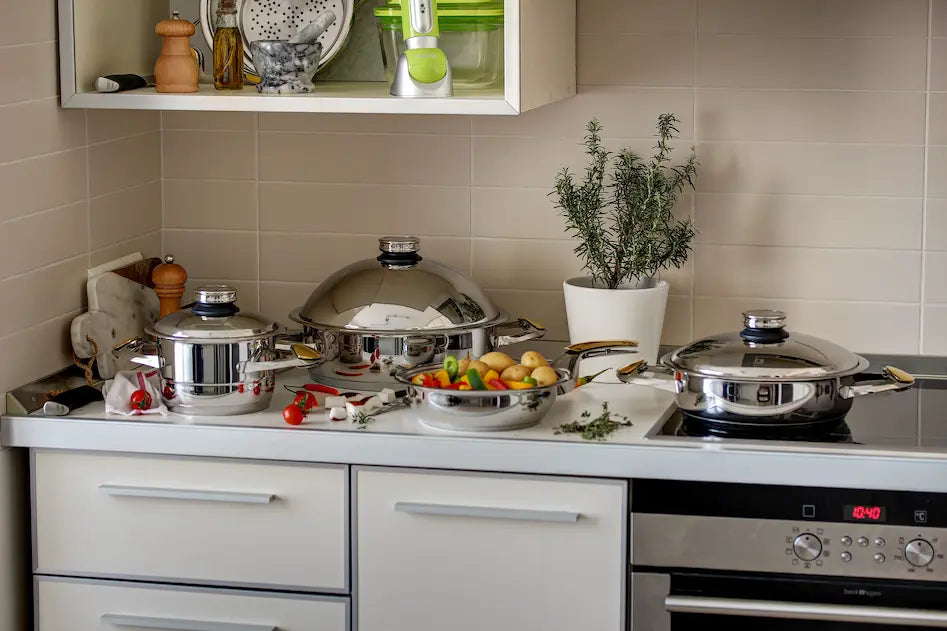


Induction Plate Cookware

Induction plate cookware is cookware with a magnetic base that can work on an induction cooking surface. In most NZ kitchens, the easiest way to check is with a magnet. If it sticks firmly to the base, the pan or pot is usually induction compatible. We recommend looking for a flat, stable base, solid construction, and the right size for how you cook.
What is induction plate cookware?
Induction plate cookware is designed to work with induction heat, which relies on magnetic energy rather than a traditional exposed element or gas flame. For cookware to perform well, the base needs to be made from, or include, a ferromagnetic material such as certain grades of stainless steel or cast iron.
That does not mean every stainless steel pan will work. Some stainless products are induction compatible, while others are not. The key factor is the base. A flat, magnetic base helps the cookware connect properly with the cooking surface, heat efficiently, and stay stable while cooking.
If you are comparing options for a full kitchen setup, it can also help to browse a dedicated Masterpiece cookware collection or narrow your options by cooking style with frying pans that suit everyday induction use.
How induction cookware works
An induction plate creates an electromagnetic field under the cooktop surface. When compatible cookware is placed on top, the base of the cookware heats directly. This can make induction cooking responsive, efficient, and easier to control once you have the right pot or pan.
For buyers who are unsure where to start, the main thing to remember is this: the cookware matters just as much as the appliance. Even a high-end induction cooktop will not perform as expected if the cookware base is warped, too thin, or not magnetic.
Key features to look for
1. Magnetic compatibility
The first check is simple. See whether the product is marked induction compatible, then confirm with a magnet if needed. A firm magnetic hold on the base is a useful sign.
2. Flat base
A flat base helps the cookware sit evenly on the plate and improves contact with the cooking surface. This supports better heating and reduces wobble.
3. Quality construction
Well-made cookware tends to heat more evenly and hold up better over time. Stainless steel with a quality core or base is a popular option for induction because it can balance durability and performance.
4. Suitable size
Choose cookware that matches the size of the cooking zone you use most often. A very small pan on a large zone, or a very large pan on a small zone, can be less practical in everyday use.
5. Comfortable handles and lids
Handles, lid fit, and overall balance affect daily usability more than many shoppers expect. We suggest checking how the cookware feels when lifted, moved, and stored.
Pros and cons of induction plate cookware
Pros
Induction compatible cookware can heat quickly, respond well to temperature changes, and support a tidy, modern cooking setup. Good quality options are often durable and versatile enough for everyday cooking.
Cons
Not every pot or pan in your cupboard will work on induction. Some cheaper options may claim compatibility but still perform unevenly if the base is too thin or poorly made. Premium cookware can also cost more upfront, so it is worth focusing on the pieces you will use most.
How to choose the right option for your kitchen
We recommend starting with your real cooking habits rather than buying a large set straight away. Ask yourself what you cook most often. If you make sauces, soups, and grains, a couple of good pots may matter most. If you sear, fry, and cook eggs often, a dependable pan may be the priority.
It also helps to think about household size. A one or two person home may only need a compact selection, while a family kitchen often benefits from more than one pot size and at least one versatile frypan.
For a broader overview of what works well on this style of cooktop, see our guide to cookware for induction cooktop. If you are comparing individual pieces, a solid induction-friendly frying pan with lid can be a practical starting point.
Best materials for induction cooking
Stainless steel
Stainless steel is a common choice because it is durable, easy to maintain, and widely available in induction compatible formats. Performance varies by construction, so the base design matters.
Cast iron
Cast iron is usually induction compatible because it is magnetic. It can retain heat very well, although it is heavier and may not suit every user or every cooking task.
Non-stick induction cookware
Non-stick options can be convenient for delicate foods and easier cleanup. We suggest following the maker's care guidance closely, especially around utensil choice and heat levels.
Care and cleaning tips
To help cookware last well, let it cool before washing, use a soft sponge for routine cleaning, and dry thoroughly after washing. Avoid harsh abrasive tools unless the maker specifically says they are suitable. For non-stick pieces, gentler care is usually the safer approach for maintaining the coating.
On induction surfaces, keeping the base clean and dry can also help performance. Food residue, burnt-on oils, or a rough base can affect contact with the plate and may make cleaning more difficult later.
Common mistakes to avoid
One common mistake is assuming all metal cookware works on induction. Another is buying a large set without thinking about how each piece will actually be used. We also see buyers overlook base flatness, handle comfort, and storage size, then feel disappointed even though the cookware looked good on paper.
Finally, avoid treating every material the same way. Stainless, cast iron, and non-stick all benefit from slightly different care habits.
FAQs
What is induction plate cookware?
Induction plate cookware is cookware with a magnetic base that can heat on an induction cooking surface. In practical terms, it needs to be induction compatible, sit flat, and make good contact with the cooktop for reliable performance.
How can I tell if cookware will work on an induction plate?
The easiest check is a magnet on the base. If it sticks firmly, the cookware is usually induction compatible. We also recommend checking the product description for induction suitability and looking for a flat, stable base.
What material is best for induction plate cookware?
That depends on how you cook, but induction compatible stainless steel is a popular all-round choice because it is durable and easy to live with. Cast iron can also work very well, while non-stick induction cookware can suit lower-stick everyday cooking.
Can I use any stainless steel cookware on an induction plate?
No. Some stainless steel cookware works on induction, but not all of it. The base needs to be magnetic, so it is best to check the product details or test with a magnet before you buy.
How do I choose the right induction cookware size?
Choose sizes that match the meals you cook most often and the cooking zones you use most. A well-chosen small set is often more practical than a large set with pieces that rarely leave the cupboard.
How should I clean and care for induction cookware?
Let the cookware cool, wash it with warm water and a soft sponge, and dry it well. Check the maker's care instructions for coating, dishwasher guidance, and heat limits, especially for non-stick pieces.
Next steps
- Cookware for induction cooktop
- Induction hob cookware
- Induction range cookware
- Induction ready cookware