


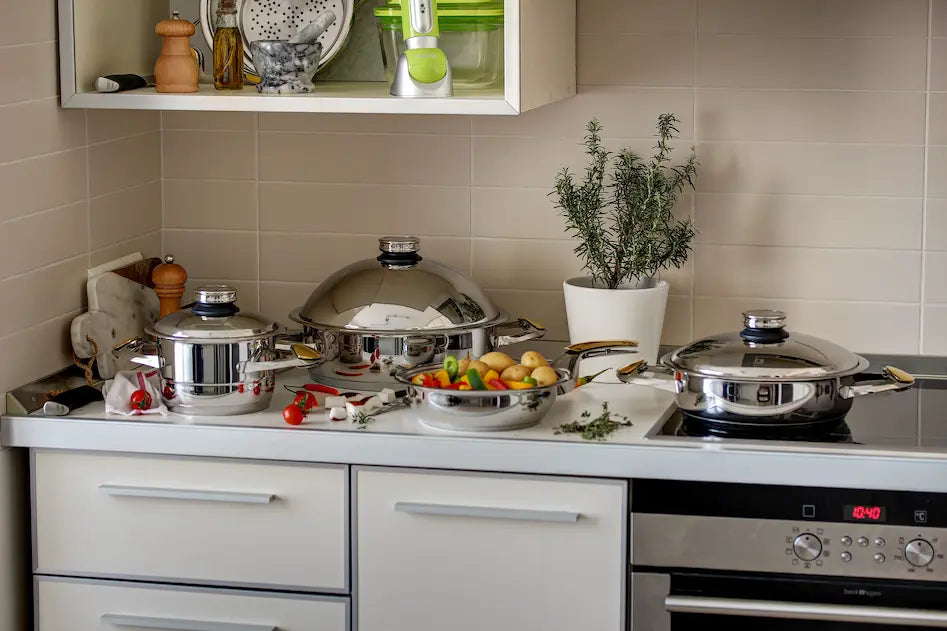


Induction Cooktop Pans in NZ

Induction cooktop pans need a magnetic base, a flat cooking surface, and the right size for your hob zone. In New Zealand, we recommend choosing induction-ready stainless steel, quality clad cookware, or cast iron if you want dependable performance, easier heat control, and better day-to-day compatibility.
If you are comparing options now, start with our Masterpiece Cookware range and our frying pans collection so you can narrow your shortlist by size, cooking style, and material.
Why induction cooktop pans are different
Induction cooktops do not heat the glass first and then transfer that heat into the pan. Instead, the cookware itself becomes part of the heating process, so pan compatibility matters from the start. That is why some pots and pans work well on induction while others do not respond at all.
For most households, the easiest way to shop is to look for cookware labelled induction compatible, then check three basics: a magnetic base, a flat bottom, and a diameter that matches your cooking zone. If you want a broader place to compare, you can also browse our cookware sets for matching pieces.
What cookware can you use on induction?
The most reliable options are stainless steel cookware with a magnetic base, multi-layer clad cookware, carbon steel, and cast iron. Some aluminium or copper pans will work only if they have an added induction base. Glass, pure aluminium, and pure copper generally do not work unless specifically engineered for induction.
Good materials for induction cooking
Stainless steel with a magnetic base
A strong all-round choice for everyday cooking. It suits searing, simmering, boiling, and pan sauces, and many households prefer it for durability.
Clad cookware
Clad cookware combines layers of metal to improve heat distribution while still staying induction compatible. This is a practical option if you want more responsive cooking without moving into specialist cookware.
Cast iron
Cast iron is naturally induction compatible and holds heat very well. It can be heavy, so it is best for cooks who are comfortable lifting and moving heavier pans carefully across a glass surface.
Non-stick induction pans
These are handy for eggs, pancakes, and lower-fat everyday cooking. We suggest checking the care instructions closely because coating life, utensil rules, and oven limits vary by pan.
How to tell if a pan is induction compatible
The quickest check is a simple magnet test. If a magnet sticks firmly to the base, the pan is usually suitable for induction. You should also check the product description for induction compatibility, because base design and overall construction still affect performance.
A pan should sit flat on the cooktop, make solid contact with the surface, and fit the cooking zone closely enough to activate the element efficiently. A warped base can reduce performance even if the material itself is technically compatible.
How to choose the right induction cooktop pans
1. Match the pan size to the cooking zone
Using an undersized pan can lead to poor activation or uneven results. Using an oversized pan may waste usable cooking area. For daily cooking, it helps to build a set with small, medium, and larger pieces rather than relying on one pan for everything.
2. Choose the right material for your cooking style
If you want versatility and easy maintenance, induction-ready stainless steel is a safe starting point. If you want easy release for delicate foods, add a non-stick pan. If you slow-cook, braise, or want stronger heat retention, cast iron can make sense.
3. Check the handle, lid, and oven limits
Not every pan has the same oven-safe temperature. Some stainless steel pans handle higher temperatures than pans with glass lids or non-stick coatings. Always confirm the manufacturer guidance before oven finishing.
4. Think about weight and storage
Heavier cookware often feels more solid, but it can be less comfortable for daily use. If you cook often, a balanced pan that is easy to lift, wash, and store usually becomes the better long-term choice.
Common mistakes when buying induction stovetop pans
The most common mistake is assuming all metal cookware works on induction. Another is focusing only on the word pan and not on the base construction, flatness, or zone size. We also see buyers choose a full set before testing whether they actually like the material, weight, and handle shape in real use.
A more practical approach is to start with the pieces you use most often, such as a frypan and saucepan, then expand once you know the range suits your cooking routine.
Care and cleaning tips
Let cookware cool before washing, use non-abrasive tools where recommended, and avoid dragging pans across the glass surface. Stainless steel may need a little more technique during cooking, while non-stick pans usually need gentler utensils and lower to medium heat. Good care helps cookware last longer and keeps the base performing properly on induction.
If you also want care products for the kitchen, you can browse our cleaning collection.
FAQs
What cookware can you use on induction?
You can use cookware with a magnetic base, including many stainless steel pans, clad cookware, cast iron, and some enamelled steel pieces. Always check the product details because not every metal pan is induction compatible.
How do I know if my pans are induction compatible?
A quick magnet test is the easiest starting point. If a magnet sticks firmly to the base and the pan sits flat on the cooktop, it is usually suitable, but the product description should still confirm induction compatibility.
What is the best cookware for induction cooking?
For most households, the best choice is quality induction-ready stainless steel or clad cookware because it balances durability, versatility, and day-to-day ease of use. The right answer still depends on whether you prioritise searing, non-stick convenience, or heat retention.
Is induction cookware dishwasher-safe or does it need hand-washing?
That depends on the material, coating, handles, and manufacturer instructions. Some induction cookware is dishwasher-safe, but hand-washing is often the safer choice if you want to protect finishes, coatings, and long-term appearance.
Is induction cookware oven-safe, and what temperatures should I watch for?
Many induction pans are oven-safe, but the safe temperature can change depending on the body material, lid type, and handle construction. We recommend checking the exact product guidance every time, especially for glass lids and non-stick pieces.
What should I look for when buying induction cookware?
Look for a magnetic base, a flat bottom, the right diameter for your hob zone, comfortable handles, and care instructions that suit how you cook. It also helps to choose the materials and pan shapes you will realistically use every week.
Next steps
- Read our guide to cookware for induction cooktops
- See what induction-ready cookware means
- Compare induction range cookware options
- Use our pot and pan set guide for NZ kitchens
- Explore stainless steel pan options in NZ