


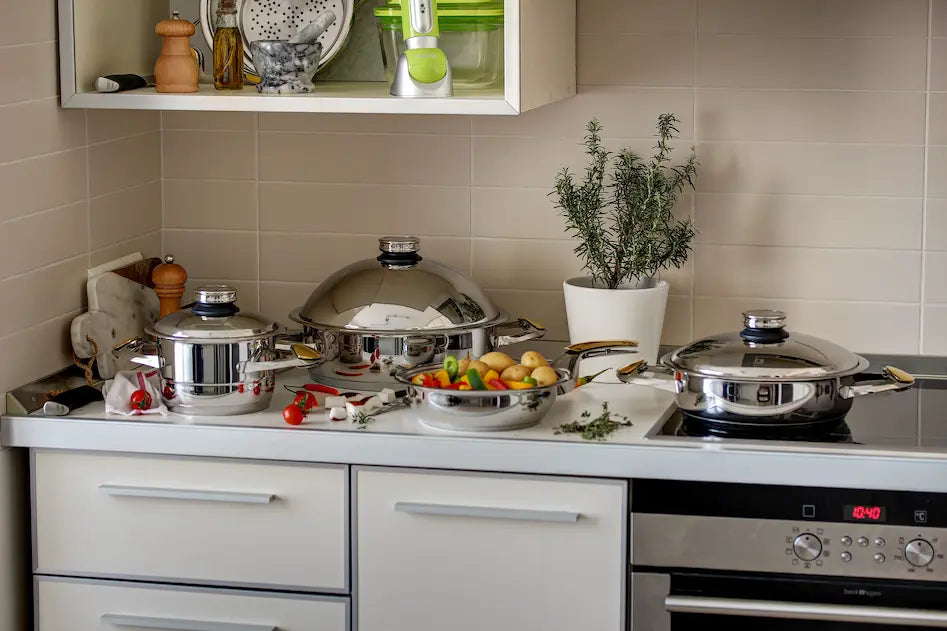


Is stainless steel the best cookware? The lifetime test premium pans keep passing

Quick answer: Stainless steel is often the best cookware for cooks who want long life, clean flavour, strong searing, reliable simmering, and a surface that does not depend on a coating. It is not the easiest material for every delicate food, but premium stainless steel rewards good technique and can become the hardest-working cookware in the kitchen.
When people ask us if stainless steel is the best cookware, we usually ask what they want it to be best at. If they want a cheap pan that makes eggs effortless on day one, stainless steel may feel demanding. If they want cookware that looks refined, handles daily cooking, tolerates real heat, works across many recipes, and can stay in service for years with the right care, top-of-the-range stainless steel is difficult to beat.
For New Zealand kitchens, that matters. Many homes now mix gas, ceramic, electric, and induction cooking. Many cooks also want fewer disposable coatings, better browning, cookware that can move from hob to oven where the product allows, and pieces that feel good enough to leave on display. That is the space where premium stainless steel earns its reputation.
If you are comparing options, start with our Masterpiece Cookware collection and our premium pots range. These pages help you see how serious stainless steel cookware is designed for everyday meals, not just special occasions.
Why stainless steel keeps winning in serious kitchens
Stainless steel has a simple advantage: it is built for real cooking. A quality stainless steel surface is smooth, durable, and non-coated, so there is no synthetic non-stick layer to wear away. That makes it especially useful for browning meat, sautéing vegetables, simmering sauces, reducing stocks, boiling pasta, steaming, and cooking dishes where flavour develops in the pan.
It also helps with the kind of cooking that confident home cooks want to master. When food browns on stainless steel, it can leave golden residue on the base of the pan. Add liquid, loosen those browned bits, and you have the start of a sauce with real depth. That is one reason stainless steel is loved by people who care about flavour, not just convenience.
The best stainless steel cookware is also visually timeless. Mirror finishes, clean lines, close-fitting lids, and well-balanced handles give the kitchen a more premium feel. Good cookware should not only perform well. It should make cooking feel more deliberate, enjoyable, and worth repeating.
What top-of-the-range stainless steel cookware does better
It feels stable, not flimsy
Premium stainless steel should feel reassuring in the hand. It should sit flat on the cooktop, resist wobbling, and feel balanced when lifted. Very light cookware can be easy to move, but it often struggles with heat stability. A better piece has enough substance to spread heat more evenly while still being practical for everyday use.
It uses smarter heat construction
Stainless steel itself is valued for durability, but the best cookware also manages heat carefully through its base or layered construction. Look for a well-made base that helps reduce hot spots, supports steady simmering, and gives the pan a more even cooking surface. This is especially important for sauces, porridge, risotto, soups, and anything that can catch if heat is uneven.
It gives control without a disposable coating
Stainless steel is not a throwaway convenience surface. It asks for preheating, the right amount of oil or liquid, and sensible temperature control. In return, it gives you a robust cooking surface that is not defined by the lifespan of a non-stick coating. For many cooks, that trade-off is exactly the point.
It suits a premium kitchen aesthetic
There is a reason high-end stainless steel cookware feels at home in modern kitchens. It looks polished, professional, and intentional. When you invest in fewer, better pieces, each pan or pot has a clear role and earns its place on the shelf.
Where stainless steel is at its best
Searing and browning
For steak, chicken thighs, mushrooms, onions, and roasted-style vegetables, stainless steel can create excellent colour. The key is patience. Preheat the pan, add fat, let the food make contact, and avoid moving it too early. When the surface is ready, food usually releases more easily.
Soups, sauces, pasta, and reductions
Quality stainless steel pots are excellent for wet cooking. They are easy to stir in, they do not hold flavour from previous meals when cleaned properly, and they suit everyday New Zealand cooking such as pasta sauces, soups, grains, curries, steamed vegetables, and family-sized one-pot meals.
Induction-ready kitchens
Many stainless steel cookware pieces are designed for induction, but not every stainless steel item is automatically induction compatible. The easiest home test is a magnet on the base. If it holds firmly, the cookware is more likely to work on induction. Always check the product information for the exact piece.
Cookware you want to keep
Top-of-the-range stainless steel makes the most sense when you are buying for long-term value. It may cost more up front, but it can reduce the cycle of replacing worn coatings, warped bases, or lightweight pans that no longer sit flat.
Where stainless steel is not perfect
Stainless steel is excellent cookware, but it is not magic. Eggs, delicate fish, and low-fat cooking can stick if the pan is too cold, too hot, or under-oiled. Water minerals can leave marks. Salt added too early to cold water can contribute to spotting or pitting over time. The best pieces can also be heavier than budget cookware.
There is also a personal suitability point. Some stainless steel contains nickel. For most everyday cooks this is not an issue, but anyone with a known nickel sensitivity or a specific health concern should choose cookware carefully and seek professional advice where needed.
So, is stainless steel the best cookware? For durability, flavour, searing, elegant presentation, and long-term use, we think premium stainless steel is one of the strongest choices. For convenience-only cooking, it may not be the easiest first step. For cooks who want skill, quality, and longevity, it is a standout.
How to choose stainless steel cookware in NZ
Choose the right pieces before choosing a large set
A practical stainless steel cookware setup usually starts with a medium saucepan or pot, a larger stockpot or casserole, and a frying pan or sauté pan. Add specialty pieces once you know how you cook. A smaller, better set is often more useful than a large set with pieces you never reach for.
Match size to your household
For one or two people, compact saucepans and a medium frying pan may be enough. For families, batch cooking, or entertaining, larger pots and wide pans become more useful. The right size helps food cook evenly and keeps the kitchen more efficient.
Look for a flat, stable base
A flat base matters on ceramic and induction cooktops. It helps the pan make proper contact with the cooking zone and supports consistent heat transfer. Check that the base feels solid and sits evenly before buying.
Check lids, handles, and oven information
Lids should fit well. Handles should feel secure and comfortable. If oven use matters to you, check the stated oven-safe temperature for the exact product, including lids and knobs. Do not assume every piece in a range has the same heat limit.
How to cook with stainless steel so food sticks less
Most sticking problems come from timing and temperature. Start by heating the empty pan on a moderate setting. Add oil once the pan is warm, then add food when the oil looks fluid and shimmering but not smoking. Give protein time to form a crust before turning it. If it clings hard, it may simply need more time.
For lower-fat cooking, use more liquid-based methods such as steaming, simmering, braising, or covered cooking. Stainless steel is very good at these techniques. You do not need every meal to be a high-heat sear to get value from the cookware.
Care and cleaning tips for premium stainless steel
Let hot cookware cool before washing. Sudden temperature changes can stress cookware and may affect the base over time. Wash with warm water, mild detergent, and a non-scratch sponge. For stuck food, soak first, then loosen gently. For cloudy marks or rainbow tones, a stainless steel cleaner or a mild vinegar solution can help, depending on the manufacturer guidance for your piece.
Avoid storing salty or acidic food in stainless steel for long periods. Cook the meal, serve it, then transfer leftovers into suitable storage containers. Dry cookware after washing to reduce water spots and keep the finish looking sharp.
FAQs
Is it healthy to cook with stainless steel pans?
For most everyday cooking, quality stainless steel is a sensible non-coated cookware choice. It is durable, easy to clean, and does not rely on a synthetic non-stick coating. If you have a known nickel sensitivity or a specific health concern, choose cookware carefully and seek professional advice.
What should not be cooked in stainless steel?
You can cook a wide range of foods in stainless steel, but very delicate foods such as eggs or thin fish fillets need good technique and enough fat or liquid. Avoid leaving salty or acidic foods stored in stainless steel for long periods, as this can affect the surface over time.
Is stainless steel the best cookware?
Stainless steel is one of the best cookware choices for durability, searing, simmering, flavour development, and long-term value. It is not the easiest option for every delicate food, but premium stainless steel is a standout for cooks who want cookware they can keep and use often.
What are the downsides to stainless steel cookware?
The main downsides are that food can stick if the pan is not heated correctly, quality pieces can cost more, and some pieces are heavier than budget cookware. Stainless steel may also show water spots or heat tint, although these are usually manageable with the right care.
Is stainless steel cookware dishwasher-safe or does it need hand-washing?
Some stainless steel cookware is dishwasher-safe, but hand-washing is usually the gentler option for preserving the finish. Always follow the care instructions for the exact piece, especially for lids, handles, thermocontrols, or special fittings.
Is stainless steel cookware oven-safe, and what temperatures should I watch for?
Many stainless steel pieces can be oven-safe, but limits vary by product. Check the stated oven-safe temperature for the pan, lid, handle, and knob. Glass lids, silicone parts, and special controls may have different limits from the stainless steel body.
What should I look for when buying stainless steel cookware?
Look for a stable base, good weight, comfortable handles, a well-fitting lid, clear cooktop compatibility, and a size that suits your meals. Premium cookware should feel balanced, sit flat, and support steady heat control.
How do I choose the right size of stainless steel cookware?
Match size to how many people you cook for and the meals you make most often. A smaller saucepan suits sauces and reheating, a medium pot suits everyday meals, and a larger casserole or stockpot suits families, soups, pasta, and batch cooking.
How long should good-quality stainless steel cookware last?
Good-quality stainless steel cookware can last for many years when used and cared for properly. Longevity depends on construction quality, heat habits, cleaning methods, storage, and whether the base remains flat and stable.
How do I clean and care for stainless steel cookware?
Let cookware cool before washing, soak stuck food, use mild detergent and a non-scratch sponge, and dry after cleaning. Avoid harsh scouring unless the manufacturer allows it, and follow product care instructions for any special lids, handles, or temperature controls.
Next steps
- Read our stainless steel cookware NZ guide
- Compare stainless steel pan options
- Learn if stainless steel pans are healthy to cook with
- Understand the downsides of stainless steel cookware
- Browse premium frying pans