


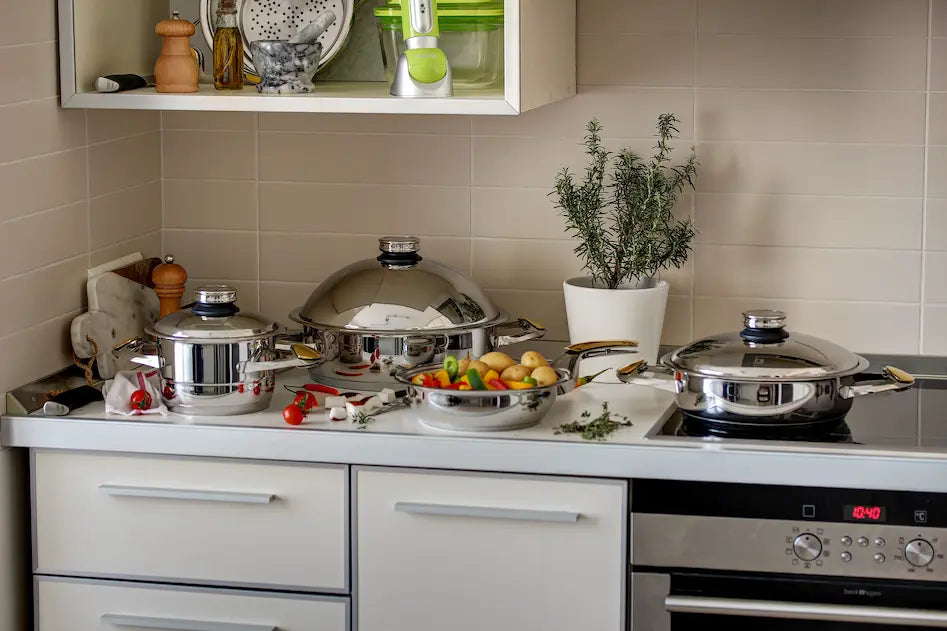


Induction Cookware NZ: How to Choose Pots and Pans That Actually Work

Quick answer: Induction cookware needs a magnetic base, a flat bottom, and the right size for your cooktop zone. In NZ kitchens, we recommend looking for stainless steel, cast iron, or induction-ready multi-layer cookware that gives steady heat, easy cleaning, and everyday versatility.
If you are shopping for induction cookware, it helps to know that not every pot or pan will work just because it looks premium. Induction cooking relies on magnetism, so the base material matters just as much as the shape, weight, and finish. That is why we suggest focusing on cookware that is clearly marked induction compatible and built with a flat, stable base.
For many home cooks, the easiest place to start is with a proven cookware collection built for modern cooktops. You can browse our Masterpiece Cookware collection or compare everyday options in our cookware sets before narrowing down the right pieces for your kitchen.
What is induction cookware?
Induction cookware is cookware designed to work on an induction hob or induction cooktop. Instead of heating the cooktop surface first, induction transfers energy into the pan itself. That means the pan must have a ferromagnetic base, usually magnetic stainless steel or cast iron, so the cooktop can detect it and heat it efficiently.
This is why some pans heat beautifully on induction while others do nothing at all. Aluminium, copper, and glass on their own usually do not work unless they have an induction-ready magnetic layer bonded to the base.
How to tell if cookware is induction compatible
The simplest test is the magnet test. If a magnet sticks firmly to the bottom of the pan, it will usually work on induction. That said, we still recommend checking the product details because compatibility is only one part of performance.
Good induction cookware should also have:
- a flat base for full contact with the cooktop
- a stable build that resists warping
- the right diameter for your cooking zones
- comfortable handles and practical lid options
- materials that suit the way you cook every day
If you are adding individual pieces rather than buying a full set, our frying pans collection can help you compare sizes and formats that make sense for induction cooking.
Best materials for induction cookware
Magnetic stainless steel
For many NZ households, stainless steel is the most balanced choice. We like it because it is durable, versatile, and easy to match with everyday cooking styles. High-quality stainless cookware can offer even heat, strong durability, and a clean look that suits modern kitchens.
Cast iron
Cast iron works well on induction because it is naturally magnetic and holds heat effectively. It can be excellent for searing and slow cooking, but it is heavier and needs a bit more care. On a glass induction surface, lifting rather than dragging the pan is a smart habit.
Multi-layer cookware
Many induction-ready pans use layered construction to combine a magnetic exterior with a responsive core. This can give you a useful balance of compatibility, control, and cooking comfort. For buyers who want fewer compromises, this is often where the best long-term value sits.
Aluminium or copper with an induction base
Some aluminium and copper cookware can work on induction, but only when the base includes a bonded magnetic layer. That is why we recommend checking the product specification rather than relying on appearance alone.
What to look for when buying induction cookware in NZ
1. A flat, solid base
A flat base helps the pan connect properly with the induction zone. If the base is uneven or too thin, you may get less consistent performance and more movement on the cooktop.
2. The right pan size
Induction works best when the cookware size matches the active cooking zone. A very small pan on a large zone, or a very large pan on a small zone, can lead to weaker performance.
3. Everyday practicality
Think about how you actually cook. A new or unsure buyer usually gets more value from a compact set of versatile pieces than from a large collection of specialty pans. A frying pan, saucepan, stockpot, and sauté-style pan can cover most daily cooking needs.
4. Durability over novelty
We recommend choosing cookware that is built for repeated use rather than chasing a trend feature. Strong handles, tight-fitting lids, and a dependable finish often matter more over time than marketing claims.
5. Easy care
If you want lower-maintenance cookware, stainless steel is often the simplest place to begin. If you want to compare specific pan styles, our guide to stainless steel pans in NZ can help you see where stainless fits in the wider cookware decision.
What cookware should you avoid on induction?
We recommend avoiding cookware that is non-magnetic, visibly warped, or poorly matched to your cooktop size. Thin bases can also be less satisfying because they may distribute heat less evenly. If a pan only works with an adapter plate, it is usually better to treat that as a temporary workaround rather than the best long-term solution.
Is induction cookware worth it?
For most buyers, yes. The right induction cookware helps you get the speed and precision people expect from induction cooking without the frustration of trial and error. Better cookware can also make the cooktop easier to use day to day because the pan responds more predictably.
If you are still comparing the category, our article on cookware for induction cooktops goes deeper into compatibility, while induction cooktop pans in NZ is useful if you are deciding between pan shapes and sizes.
How to build a practical induction cookware set
If you are buying for a first induction kitchen, we recommend starting with a small, useful core:
- a medium frying pan for everyday cooking
- a saucepan for sauces, grains, and reheating
- a larger pot for soups, pasta, and batch cooking
- a lid or two that fit the pieces you use most
This gives you enough flexibility without overbuying. Once you know how you cook on induction, you can add specialist pieces later. Our guide to induction-ready cookware is a useful next read if you want a clearer shortlist before you buy.
FAQs
What cookware can you use on induction?
You can use cookware with a magnetic base on induction. Magnetic stainless steel, cast iron, and induction-ready multi-layer pans are the most common options.
How do I know if my cookware is induction compatible?
A simple magnet test is the easiest check. If a magnet sticks firmly to the base, the cookware will usually work on an induction cooktop.
Can you use stainless steel on induction?
Yes, but only if the stainless steel base is magnetic. Many stainless steel pans work well on induction, while some do not, so it is worth checking the specification.
Do you need special pans for induction cooktops?
You do not always need a special-looking pan, but you do need a compatible one. The key requirement is a magnetic, flat base that the induction cooktop can detect properly.
What is the best cookware material for induction?
For many home cooks, magnetic stainless steel is the most practical all-round choice because it balances durability, versatility, and easy everyday care.
Next steps
- Shop Masterpiece Cookware
- Compare cookware sets
- Read our induction cooktop cookware guide
- Explore our induction cooktop pans guide