


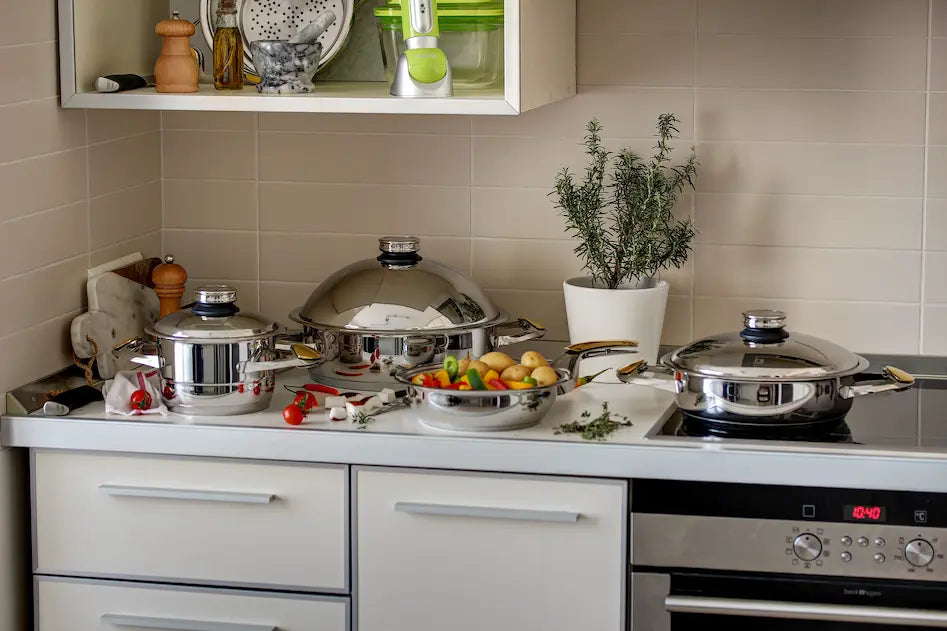


How to Choose a Wok in NZ: 24 cm vs 30 cm, Flat-Bottom Fit and Four Cooking Modes

A larger wok can look like the safer, more versatile choice on a product page. Then it is filled with food, and suddenly it feels bulky to lift, awkward to wash and too wide for the cupboard. The smaller option creates the opposite worry: will the meals you cook most often feel crowded?
Direct answer: Choose the 24 cm Zepter wok when compact storage, lighter handling and smaller everyday meals matter most. Choose the 30 cm wok when you regularly need more working room, more liquid capacity or space for mixed and batch-style meals. Before ordering either one, confirm hob contact, cupboard and sink clearance, and whether you are comfortable handling its empty weight plus food and liquid.
Take the 90-second kitchen-fit check
Do not start with the diameter alone. Write down these five answers before comparing the two models:
- Usual meal volume: Are you normally cooking a quick meal, a covered one-pan dish, or a larger mixed batch?
- Most-used hob zone: Which element or gas ring would hold the wok, and how much stable base contact does it provide?
- Cupboard and sink space: Can the wok, lid and long handle fit through the cupboard opening, sit on the shelf and clear the sink comfortably?
- Full-pan lifting comfort: What comparable pan can you safely lift, tilt and carry when it contains food or water?
- Cooking modes: Will you mainly stir and fry, cook covered with or without added water where suitable, simmer, or steam?
Your answers create a practical wok size guide for your NZ kitchen. The right choice is the one that fits your routine when full, not simply the one with the larger number.
The two Zepter woks in real numbers
The live Zepter Kitchen woks collection currently lists a 24 cm model and a 30 cm model. Here is the verified specification reality check.
| Buyer detail | 24 cm Zepter wok | 30 cm Zepter wok |
|---|---|---|
| Capacity | 2.4 L | 4.5 L |
| Height | 7.9 cm | 10 cm |
| Net weight | 1.56 kg | 2.66 kg |
| Steel | AISI 316L-304 | AISI 316L-304 |
| Temperature indicator | Analog Thermocontrol included | Analog Thermocontrol included |
| Oven suitability | Suitable with the Analog Thermocontrol removed | Suitable with the Analog Thermocontrol removed |
| Dishwasher suitability | Suitable with the Analog Thermocontrol removed | Suitable with the Analog Thermocontrol removed |
| Bottom design | Official Zepter wok material describes a flat-bottom design | Official Zepter wok material describes a flat-bottom design |
The 30 cm model provides 2.1 L more stated capacity and is 1.10 kg heavier when empty. That extra room can be useful, but it also affects lifting, washing and storage before any ingredients are added.
Both live product pages state an at least 30-year warranty for covered defects in Zepter metal, subject to current terms. The Analog Thermocontrol and other non-metal parts have separate terms. Always check the current warranty wording at purchase.
Pass the hob-contact gate before choosing size
A wok can have generous capacity and still be the wrong fit if it does not sit securely on the hob you use most. On an electric hot plate or smooth ceramic surface, stable contact helps the base receive heat consistently. A flat-bottom design also gives a steady resting point on gas rings, rather than relying on a separate wok ring.
For ceramic and glass surfaces, keep this article focused on the buying decision and use the ceramic cooktop cookware guide for the detailed base, movement and care checks.
Induction needs a separate confirmation. A flat bottom alone does not prove induction compatibility. Induction also requires a suitable magnetic base and the cookware should be identified as compatible by the product or appliance manufacturer. The current NZ product pages reviewed for these two exact woks do not explicitly confirm induction compatibility, so check the current product marking or ask Zepter Kitchen before ordering for an induction hob.
Also compare the base contact area with the active zone, not only the rim diameter. Wok walls flare out, so a 30 cm top diameter does not mean the whole 30 cm touches the hob.
Choose capacity or easier control
Scenario 1: Compact kitchen and quick meals
The 24 cm wok is the stronger starting point when bench space is tight, cupboard openings are narrow, or your common meal is a smaller vegetable, noodle, egg or reheating job. Its 2.4 L capacity, 7.9 cm height and 1.56 kg net weight make it easier to position, carry to the sink and store than the larger model.
The trade-off is crowding. If you often add several bulky ingredients at once, the food may stack rather than spread. That can change how easily you stir, turn and manage moisture.
Scenario 2: Larger mixed meals and batch cooking
The 30 cm wok suits cooks who regularly need more working room for mixed vegetables, noodles, covered dishes, simmering liquid or staged batch cooking. Its 4.5 L capacity and 10 cm height offer more room to move ingredients and contain liquid.
The trade-off is physical. At 2.66 kg empty, it is already 1.10 kg heavier than the 24 cm model. Add a lid, food and liquid, and the full-pan handling difference becomes more important than the diameter printed on the page.
Scenario 3: Easy lifting, washing and storage come first
Choose the 24 cm format when you value one-handed positioning, simpler sink clearance and less shelf space. Choose the 30 cm only when the extra capacity solves a real weekly problem. A premium buy-once decision should reduce friction in your routine, not create a pan you avoid because it is inconvenient when full.
The Zepter Four-Mode Wok Selector
Zepter lists four cooking applications for both woks: traditional cooking with water, cooking without water, frying without fat and steam cooking. The useful buying question is not whether the wok can do all four. It is which modes you will use often enough to justify the size.
The lid and Analog Thermocontrol support controlled covered cooking, but the indicator is a guide rather than a substitute for checking the food. For detailed heat cues, use the Zepter low-heat cooking guide.
1. Traditional cooking with water
Practical jobs: Simmering noodles, soups, sauces or a covered dish with added liquid.
Lid and movement: Use the lid when you want to retain heat and moisture. Stir as needed to prevent ingredients settling or sticking, and leave enough headroom for bubbling.
Size tendency: The 24 cm model is convenient for smaller liquid-based jobs. The 30 cm model offers more stated capacity when the volume of liquid and ingredients is the deciding factor.
2. Cooking without water where suitable
Practical jobs: Covered cooking with moisture-rich vegetables or other suitable ingredients that can release their own moisture.
Lid and movement: Keep the lid in place for the covered phase and avoid unnecessary opening. Use controlled heat and check that the ingredients and method provide enough moisture. Do not treat water-free cooking as a universal rule for every food.
Size tendency: The 24 cm can be easier to control for a compact portion. The 30 cm gives more room when bulky ingredients need space without being compressed.
3. Frying without fat where suitable
Practical jobs: Browning or frying suitable foods using the manufacturer-listed method, with careful heat control and appropriate food preparation.
Lid and movement: Frying and browning are generally managed with the lid off so moisture can escape. Move or turn food when it releases rather than forcing it too early. This listed application is a cooking method, not a health guarantee, and some foods or desired results may still call for added fat.
Size tendency: The 24 cm is easier to handle for smaller, controlled batches. The 30 cm can provide more surface and movement room, but overloading either size can trap steam and reduce browning.
4. Steam cooking
Practical jobs: Steaming vegetables, dumplings or other suitable foods above simmering water using a compatible rack, basket or steamer insert.
Lid and movement: Keep the food above the water, use the lid to contain steam, monitor the water level and never let the wok boil dry. Food usually needs little movement once steaming begins.
Size tendency: The 24 cm may be convenient for a smaller steamer setup. The 30 cm may provide more internal room, but measure the steamer insert, lid clearance and water gap rather than assuming fit from the rim diameter.
Three meals that reveal the right size
A quick vegetable and noodle meal
Picture the ingredients you actually use: sliced vegetables, cooked noodles, aromatics and sauce. If that amount can move freely in a 2.4 L vessel without being pressed up the sides, the 24 cm model may be enough. If you routinely double the vegetables or cook a larger mixed batch, the 30 cm gives more working room.
For a brand-specific example of how a wok can handle vegetables, see the Vegetable Salad From Wok recipe.
A covered one-pan family dish
Think about the full volume after protein, vegetables and any liquid are added. The 30 cm model is more likely to suit a larger covered mixture because of its 4.5 L capacity and 10 cm height. The 24 cm remains appealing when the batch is smaller and you want easier transfer from hob to bench or sink.
When using poultry, minced meat or seafood, prevent cross-contamination and cook the food thoroughly. The Thermocontrol can support heat awareness, but it does not replace safe food handling or checking doneness.
A steaming or simmering setup
Set out the insert or rack you plan to use, then check its diameter, height under the lid and clearance above the water. A 30 cm rim may offer more room, but the useful fit depends on the internal setup. If your steamer is compact and your storage is limited, the 24 cm wok may be the more convenient everyday tool.
Measure these five things before ordering
- Your most-used hob zone: Note the active zone or ring size and confirm that the wok can sit securely without rocking or crowding nearby controls.
- Cupboard opening and shelf depth: Measure the narrowest opening, usable shelf depth and the path of the long handle.
- Sink clearance: Check whether the wok can sit flat enough to wash and rinse without hitting the tap or splashback.
- Safe lifting comfort: Test a comparable pan at about 1.56 kg and 2.66 kg empty, then add a realistic amount of water to understand the full-pan difference. Lift only what you can control safely.
- Oven and cleaning routine: Both live pages list oven and dishwasher suitability, but the removable Analog Thermocontrol must stay out of the oven and dishwasher, off hot surfaces and away from high temperatures.
Your final 24 cm or 30 cm verdict
Choose 24 cm when you have a small kitchen, cook compact meals, prioritise easier lifting and washing, or expect the wok to be used frequently for smaller covered, fried or steamed jobs.
Choose 30 cm when your regular meals genuinely need the 4.5 L capacity, extra height and more ingredient room, and you are comfortable storing and controlling a 2.66 kg wok before food is added.
Pause before buying when induction compatibility is essential, the hob zone is unusually small, or you have not tested the lifting difference. Confirm those points first, then choose by the cooking mode and meal volume you will use most.
FAQs
What size wok should I buy for a small NZ kitchen?
The 24 cm wok is usually the more practical choice for a small kitchen because it is lighter, lower and easier to wash and store. Choose the 30 cm only when its extra 2.1 L of stated capacity solves a regular cooking need.
Is a 24 cm or 30 cm wok better?
Neither size is universally better. The 24 cm favours compact handling and smaller meals, while the 30 cm favours more capacity and ingredient room at the cost of extra weight and storage space.
Does a wok need a flat bottom for an electric or ceramic cooktop?
A flat bottom is the practical choice for electric hot plates and ceramic cooktops because it provides stable contact with the flat heating surface. Also match the contact area to the hob zone and follow the appliance maker's cookware guidance.
Will a flat-bottom wok work on induction?
Not automatically. Induction requires a suitable magnetic base as well as stable contact, and the current NZ pages reviewed do not explicitly confirm induction compatibility for these exact two woks. Check the current product marking or confirm with Zepter Kitchen.
Can a flat-bottom wok be used on gas?
Yes. A flat-bottom wok can sit on a suitable gas ring and does not depend on a separate round-bottom wok support. Centre it securely and keep the handle away from adjacent flames.
Can a wok be used for steaming, simmering, boiling and frying?
Yes. The Zepter product data lists traditional cooking with water, cooking without water, frying without fat and steam cooking. Use the correct lid, insert, water level and heat control for the chosen method.
Is the 30 cm Zepter wok too heavy for everyday use?
That depends on your strength, sink setup and cooking volume. It weighs 2.66 kg empty, so test a comparable weight and remember that food, liquid and the lid will increase the full-pan load.
Does a stainless steel wok need seasoning?
Stainless steel does not require the permanent seasoning layer used for carbon steel or cast iron. Good heat control, suitable preheating, food preparation and the right amount of fat where needed are more important for managing sticking.
Can the Analog Thermocontrol go in the oven or dishwasher?
No. Remove the Analog Thermocontrol before placing the wok in the oven or dishwasher. Do not place it on hot surfaces or expose it to high temperatures.
Next steps
Use your five measurements and choose the size that removes the most friction from the meals you already cook. The Zepter woks collection lets you review both current formats together before making the final decision.
References
- Zepter Kitchen NZ 24 cm wok product specifications
- Zepter Kitchen NZ 30 cm wok product specifications
- Zepter Kitchen NZ woks collection
- Electrolux NZ induction cookware guidance
- Bosch NZ induction cookware guidance
- New Zealand Food Safety home preparation and cooking guidance
- Made In stainless steel seasoning guidance