


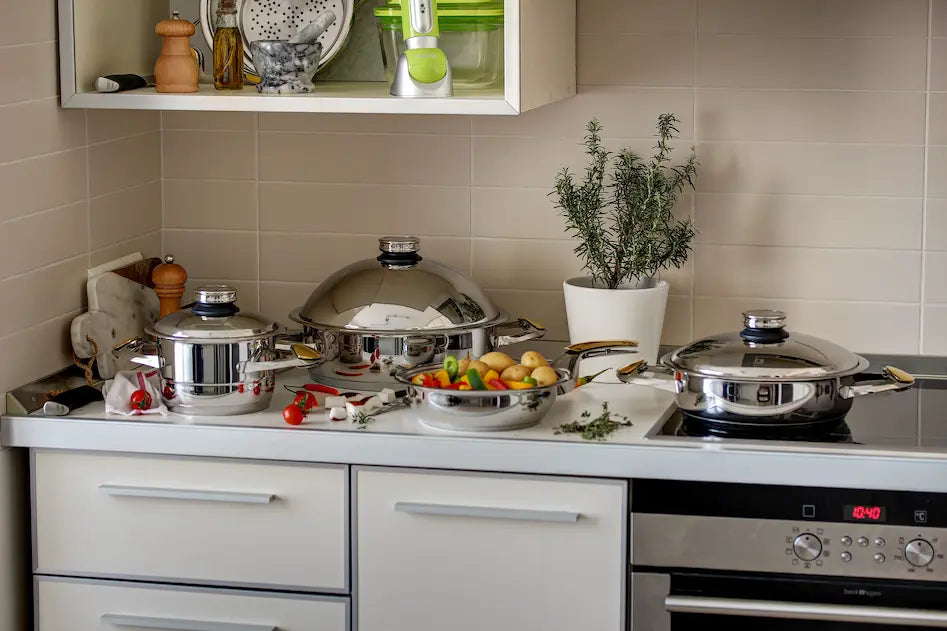


Low-Heat Cooking with Zepter MasterPiece Cookware: A Practical NZ Meal Method Guide

You can buy quality stainless steel cookware and still end up with food sticking, vegetables turning dull, sauces boiling too hard, or steam escaping every time you lift the lid to check. That does not always mean the pan is wrong. Often, the heat rhythm is wrong.
Zepter MasterPiece cookware rewards a calmer way of cooking: less blasting heat, more lid discipline, and more attention to the cues already happening in the pot. Once you learn those cues, low-heat cooking becomes less mysterious and much more repeatable for everyday NZ meals.
Direct answer: Low-heat cooking with Zepter MasterPiece cookware means using controlled heat, a fitted lid, the food’s own moisture where suitable, and Thermocontrol cues to keep cooking steady instead of aggressive. Start with the right heat for the food, wait for moisture, steam or browning cues, then lower the heat so the meal cooks gently. It is not the same as using the lowest setting from the start, and it never replaces safe internal temperatures for chicken, mince, seafood or reheated leftovers.
What low-heat cooking means in a Zepter MasterPiece context
In a Zepter MasterPiece context, low-heat cooking is a method, not just a hob setting. The aim is to let the cookware store and distribute heat, then use a lid, moisture and timing to finish the food without constant stirring, lid lifting or hard boiling.
For vegetables, that can mean starting rinsed food in a cool pot and letting the natural moisture build. For fish, it means gentle heat and minimal movement. For chicken pieces, it means controlled browning first, then finishing safely. For sauces, grains and one-pot meals, it means a steady simmer rather than a rolling boil.
The MasterPiece Cookware collection is the main place to explore the full cookware system, while Thermocontrols are useful if you want a clearer temperature cue without repeatedly lifting the lid.
The cue map: steam, lid seal, cooking sound and Thermocontrol movement
Before the meal-by-meal methods, learn the four cues. They tell you when to lower heat, when to wait, and when to correct your technique.
| Cue | What you are looking for | What to do |
|---|---|---|
| Steam | A small, steady release, not a cloud pouring out of the lid. | Once moisture is active, reduce the hob. Escaping steam usually means heat is too high or the lid is not seated. |
| Lid seal | The lid settles and stays quiet. You may see light moisture around the rim. | Leave it closed. Every lift releases heat and moisture, which can make food dry or extend cooking time. |
| Cooking sound | A soft sizzle, gentle simmer or quiet bubbling, depending on the food. | Turn down if the sound becomes harsh, spitting or rolling. Turn up slightly if there is no activity after several minutes. |
| Thermocontrol movement | The indicator moves as the cookware and contents heat. Digital models may let you set temperature and time. | Use the movement as your reminder to reduce heat and hold steady. Do not chase the dial with constant adjustments. |
Zepter’s own method background describes the Thermocontrol as a way to control the cooking process without lifting the lid, which is the habit we are practising here. You can read more in MasterPiece cookware secrets.
Meal-by-meal low-heat method map
Vegetables: rinsed food, cold pot start, lid on
Best for: broccoli, carrots, beans, cauliflower, courgette, cabbage, pumpkin cubes and mixed seasonal vegetables.
- Rinse the vegetables and leave a little water clinging to the surface. Do not dry them completely.
- Place them in a cool pot. For older or very dry vegetables, add 1 to 2 tablespoons of water.
- Put the lid on and start on medium heat. Watch for the first Thermocontrol movement, a quiet cooking sound, or a little steam activity.
- Lower the heat and let the vegetables finish with the lid on. Avoid opening the pot every minute.
- Season at the end, then rest for a minute with the lid off if you want a drier finish.
This is the practical version of waterless cooking cookware: not magic, just using the moisture already in the food where suitable. The result should be bright, tender vegetables rather than vegetables that have been thrashed in boiling water. For this style, the Zepter pots collection is the natural starting point.
Fish: gentle heat, minimal movement, protect texture
Fish is where low-temperature cooking cookware habits really show. Too much heat tightens the flesh and makes sticking more likely.
- Pat fish dry and season it. For delicate fillets, a light brush of oil is fine if you prefer it.
- Warm the pan gently rather than blasting it. You want a soft sizzle, not smoking heat.
- Place the fish down and leave it alone until it releases more easily.
- Use the lid briefly for thicker pieces, then remove it near the end to avoid over-steaming.
- Stop cooking before the fish looks dry. Resting heat will continue the finish.
For fish, use less added oil as a technique goal, not a rule that ruins dinner. If a teaspoon of oil protects a delicate fillet and keeps the texture better, use it.
Chicken pieces: brown first, then finish safely
Low heat does not mean pale chicken. The better rhythm is controlled browning, then a gentler finish.
- Dry the chicken pieces well. Moisture on the outside encourages sticking and steaming.
- Preheat the pan to a moderate heat. Add a small amount of oil only if the cut or marinade needs it.
- Place the chicken down and wait. Do not drag it around before a crust forms.
- Once browned, lower the heat, add the lid if needed, and let the centre cook through.
- Check the thickest part with a clean food thermometer. Low-heat cooking still needs safe internal temperatures.
For sautéing, browning and pan-finished meals, see the Zepter frying pans collection. For chicken, mince and other higher-risk foods, heat control is about texture and timing, while food safety still comes first.
Sauces and grains: controlled simmer, not aggressive boiling
Rice, oats, pasta sauces, lentils and grains often fail because the heat stays high after boiling starts. The bottom catches, the sauce thickens too fast, and the cook keeps adding water to rescue it.
- Bring the liquid just to the point of active movement.
- Stir once, scrape the base, then lower to a gentle simmer.
- Use the lid where steam helps the food hydrate, such as rice or lentils.
- Vent the lid or remove it where evaporation helps the sauce concentrate.
- Let grains rest off heat before fluffing. That final rest often fixes texture better than more boiling.
Reheating leftovers: gentle reheat, safe finish
Low heat is useful for reheating because it reduces scorching and uneven hot spots. The safety rule is simple: gentle does not mean lukewarm.
- Move leftovers from the fridge into a suitable pot or pan and break up thick portions.
- Add a splash of water, stock or sauce if the food is dry.
- Cover and reheat gently, stirring or turning so the centre heats evenly.
- Finish until piping hot throughout. Use a thermometer where possible, especially for meat, rice dishes or dense one-pot meals.
- Do not reheat leftovers repeatedly. Reheat the portion you plan to eat.
For meal prep, divide leftovers into smaller portions before chilling so they cool and reheat more evenly.
One-pot family meals: choose capacity and trust the lid
One-pot meals are where cookware heat control in NZ kitchens becomes practical: curries, stews, vegetable sides, rice meals, pasta sauces, mince sauces and weekend batch cooks.
- Choose a pot with enough capacity. Crowding traps too much water and makes browning harder.
- Brown aromatics or protein first if flavour depends on it.
- Add vegetables and liquid in sensible layers, with denser food lower in the pot.
- Bring to gentle activity, then lower heat and keep the lid on.
- Check near the end, not constantly. Adjust seasoning after the simmer has done its work.
If you are building a larger kitchen system, compare the full Zepter MasterPiece cookware range and keep an eye on cookware sets if you prefer to plan multiple pieces together.
The Thermocontrol Green-Zone Practice Run
Use this simple practice run before trying a full family dinner. It teaches the low-heat rhythm without pressure.
Practice dish: broccoli, carrot and courgette side
Start state: Use a cool pot, rinsed vegetables, and a fitted lid. Keep a little rinse water on the vegetables. If the vegetables are dry, add 1 tablespoon of water.
Step 1: Build moisture. Place the pot on medium heat with the lid on. Do not lift the lid straight away. Watch the Thermocontrol begin to move and listen for the first soft cooking sound.
Step 2: Lower the heat. When the indicator reaches the cooking zone shown on your Thermocontrol model, or when you see the first small steam activity, turn the hob down. The goal is steady cooking, not a hard boil.
Step 3: Leave the lid alone. Let the vegetables cook for several minutes without lifting. If the lid stays settled and the sound is gentle, the method is working.
Step 4: Check once. Open near the end, test texture, season, and remove from heat. If you want a drier finish, rest for a minute with the lid off.
Adjust next time: If steam poured out, start lowering the heat earlier. If food stuck, use a little more starting moisture or reduce heat sooner. If vegetables overcooked, shorten the covered time by 1 to 2 minutes or cut vegetables slightly larger.
Troubleshooting: if this happens, do that
| Problem | Likely cause | Fix next time |
|---|---|---|
| Food sticks | Pan too hot, food moved too early, surface too wet, or not enough moisture for lid-on cooking. | Preheat more gently, dry protein well, wait for natural release, and lower heat once the cooking cue appears. |
| Vegetables are watery | Too much added water, overcrowding, or heat kept too low for too long. | Use rinse moisture only where suitable, cook in a wider pot, and finish uncovered for 1 minute. |
| Steam leaks heavily | Heat is too high, lid is not seated, or the pot is overfilled. | Lower heat earlier, check the rim is clean, and leave enough headspace. |
| Food turns dry | Lid lifted too often, heat too high, or cooking time too long. | Trust the lid, reduce heat, and use the Thermocontrol cue instead of repeated checking. |
| Food overcooks | Residual heat was not counted, or pieces were cut too small. | Stop earlier, rest off heat, and use larger cuts for vegetables or fish. |
| You keep lifting the lid | You are relying on sight instead of cues. | Choose one check time. Until then, use sound, steam and Thermocontrol movement as your guide. |
Which MasterPiece piece fits the method?
| Meal job | Best-fit direction | Why it suits low-heat cooking |
|---|---|---|
| Vegetables, grains, soups and sides | Pots | Good capacity, lid-on cooking, controlled simmering and gentle moisture management. |
| Fish, chicken pieces, omelettes and quick sautéing | Frying pans | Wide cooking surface for browning first, then lowering heat for a gentler finish. |
| Mixed family cooking and batch prep | MasterPiece Cookware | The broader range lets you match pot size and pan shape to the actual meal. |
| Building a coordinated kitchen setup | Cookware sets | Useful when you want several pieces planned around vegetables, proteins, sauces and one-pot meals. |
| Learning heat cues without lifting the lid | Thermocontrols | Helps you practise when to lower heat and when to leave the lid closed. |
Food safety note for low-heat cooking
Low-heat cooking is about gentler pan heat and better timing. It is not a food-safety shortcut. For chicken, mince, thick meat pieces, seafood and reheated leftovers, use a clean food thermometer where possible and follow NZ food-safety guidance. Leftovers should be reheated until piping hot throughout, and higher-risk foods should not sit for long periods in the warm middle zone.
People who are pregnant, older, immunocompromised, or cooking for young children should be extra careful with poultry, seafood, rice dishes and leftovers.
Try the method with the right cookware
Start with one meal this week: rinsed vegetables in a covered pot, fish on gentle heat, or a one-pot family side where you lower the hob as soon as moisture is active. Once the rhythm feels familiar, the Thermocontrol and lid cues become easier to trust.
FAQs
What is low-heat cooking with Zepter MasterPiece cookware?
Low-heat cooking with Zepter MasterPiece cookware is a controlled method that uses gentle heat, a fitted lid, moisture cues and Thermocontrol guidance to cook steadily instead of boiling hard or overheating the pan. It helps with texture, flavour and consistency, but it still requires safe final temperatures for higher-risk foods.
How do you know when to lower the heat?
Lower the heat when the food has started to give you a cue: light steam activity, a settled lid, a gentle cooking sound, or Thermocontrol movement into the cooking zone on your model. If steam is pouring out or the pan sounds harsh, lower the heat sooner next time.
Should food start in a cold pot or hot pan?
Vegetables for lid-on, moisture-based cooking often start in a cold pot with rinse water clinging to them. Fish, chicken and foods that need browning usually start in a gently preheated pan. The method depends on whether the goal is steaming, simmering, browning or reheating.
What does the Thermocontrol show?
The Thermocontrol shows how the cookware is heating and helps you control the cooking process without lifting the lid repeatedly. Digital models may also let you set cooking temperature and time. Use it as a cue to lower heat and keep the cook steady.
Can you cook vegetables without adding water?
Yes, many fresh vegetables can be cooked with little or no added water when they are rinsed and cooked with the lid on. If vegetables are dry, dense or older, add a small splash of water so the pot has enough moisture to work with.
Can you cook with less added oil?
Yes, many meals can be cooked with less added oil when heat is controlled and the food is not moved too early. For delicate fish, marinated foods or flavour preference, a small amount of oil can still be useful. Less oil should be practical, not forced.
Why does food stick when cooking at low heat?
Food often sticks because the pan was too hot at the start, the food was moved before it released, protein was wet on the surface, or there was not enough moisture for lid-on cooking. Use gentler preheating, dry protein well, wait before turning, and lower the heat once cues appear.
How do you reheat food safely at low heat?
Reheat leftovers gently to protect texture, but finish until the food is piping hot throughout. Stir or turn dense foods so the centre heats evenly, use a food thermometer where possible, and only reheat the portion you plan to eat.
Which MasterPiece cookware piece suits each meal?
Use pots for vegetables, grains, soups and one-pot sides; frying pans for fish, chicken pieces and sautéing; larger pots or casseroles for family meals and batch cooking; and Thermocontrols if you want clearer heat cues without lifting the lid.