


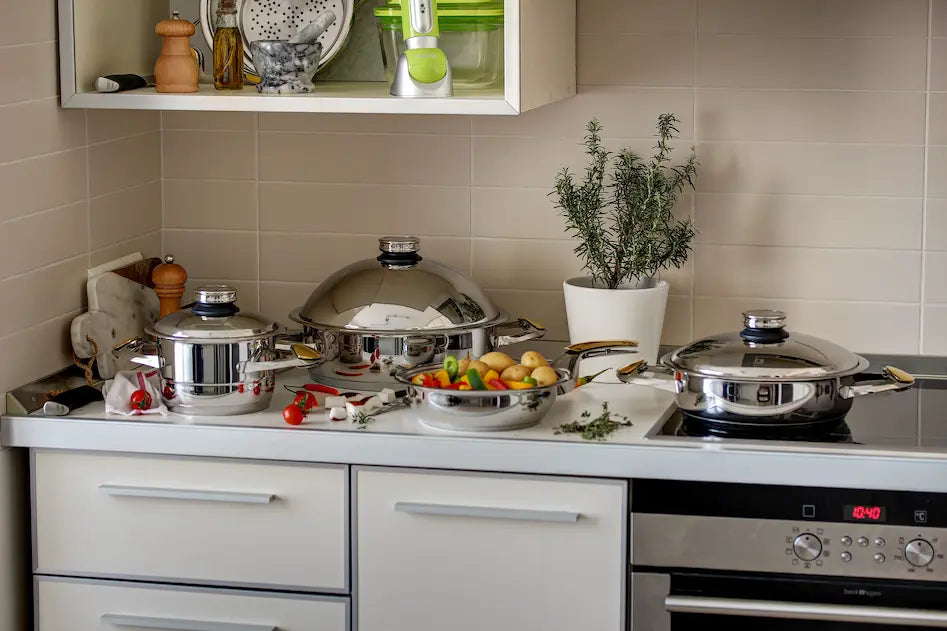


Best Cookware in NZ: What Five Weeknight Dinners Reveal Before You Buy

Your cookware has five nights to prove itself
It is late afternoon. You open the fridge, see half a bag of greens, a pack of chicken, some fish for later in the week, and a sauce that needs using. In your head, Monday is pasta, Tuesday is chicken and vegetables, Wednesday needs to be quick, Thursday can simmer while everyone gets on with the evening, and Friday should use one pan and very little thought.
That is a better test of cookware than a long list of specifications. For everyday New Zealand cooking, the best cookware should give you the right mix of useful capacity, controlled heat, enough cooking surface, lids where they add real value, durable construction and versatility for the food you actually cook.
Over five ordinary dinners, those qualities become easy to see. You notice whether a pot feels calm when it is full, whether a pan can brown food without forcing you to keep the heat high, and whether a lid helps the meal along instead of becoming something you leave in the cupboard.
Monday: Pasta night tests steady heat and useful capacity
Pasta night sounds simple until the pot is close to full, the sauce is simmering beside it and you are trying to drain, stir and serve without creating extra washing up. This is where useful capacity matters. A pot needs enough room for the food to move and cook comfortably, but it also needs to remain manageable when it is full of hot water or sauce.
Steady heat matters just as much. A sauce that jumps from barely moving to a hard boil every time the hob changes makes dinner harder than it needs to be. A well-designed base should help spread heat predictably, while a fitted lid can speed up heating or hold a gentle simmer when that is useful.
Monday also tells you something about shape. Tall pots can make sense for pasta, stock and soups. Wider casseroles can give you more room for sauces, risotto-style dishes and meals that start with browning before liquid is added. The point is not to find one universal shape. It is to notice what your meals ask of you most often.
Tuesday: Chicken and vegetables test browning, then control
Tuesday is where cookware starts to show its character. You want enough heat to give chicken good colour and bring out flavour in the vegetables, then you want the pan to respond when you turn the hob down. If the pan only feels useful at full blast, it is making you do more work than necessary.
This is one reason we like Zepter MasterPiece cookware for everyday cooking. The system is built around controlled heat rather than constant high heat. MasterPiece uses Superior Metal 316L, and its Accuthermal Compact Bottom is designed to retain and spread heat so the cookware can carry the meal from the initial browning stage into gentler cooking.
For a chicken dinner, that means the first part of cooking can be about colour and flavour, while the second part can be about control. A lid can then become useful for finishing thicker pieces or helping vegetables soften without needing the pan to keep racing.
A quick safety note: controlled heat does not replace safe cooking. Chicken, mince and seafood still need to be cooked safely all the way through.
Wednesday: Fish and greens expose whether the cookware demands too much from you
Fish is less forgiving than pasta or a casserole. It quickly shows whether you can control the pan without chasing it. Too much heat can make a delicate fillet tighten, catch or dry out. Too little heat can leave you waiting for colour that never really develops.
The best cookware for this kind of dinner is not simply the piece that can tolerate the highest temperature. It is the piece that gives you useful control and a cooking surface that suits the job. You want to warm the pan, add the fish, let the surface do its work, and then reduce the heat without the whole meal feeling unpredictable.
For people who cook delicate proteins often, selected MasterPiece URA pieces can be relevant. URA is not on every MasterPiece item. On the products where it is used, the technology changes the inner metal surface rather than adding a conventional separate non-stick layer. We see that as a useful option when you want easier release while still choosing a substantial stainless steel-based pan.
Greens cooked alongside the fish add another small test. Can you give them enough heat to cook well, then ease off before they lose their texture? Wednesday is where good control starts to feel more valuable than raw power.
Thursday: Curry or stew tests depth, moisture and lid behaviour
By Thursday, dinner often needs to carry itself for a while. A curry, stew or covered braise asks for depth, enough capacity for stirring, and a lid that helps hold a steady cooking environment once the ingredients are in.
Depth matters because you want room for onions, spices, meat or vegetables, liquid and movement without everything crowding the rim. Capacity matters because a family meal that technically fits but leaves no safe stirring room is not really a good fit.
This is also the night when lid design earns its keep. With relevant lidded MasterPiece cookware, Closed Circle refers to the controlled covered cooking approach. In practical terms, the lid and pot are used together to help keep heat and moisture working inside the cookware rather than being lost through constant lifting.
If you want to go further into that method, our low-heat cooking guide explains the cues and technique in more detail. For this five-night test, the simple lesson is enough: a good covered pot should help you hold a calm simmer without needing constant correction.
Friday: The one-pan dinner tests whether versatility is real
Friday is the test that catches out cookware that looks versatile but is awkward in real life. Maybe you are browning mince, softening vegetables, adding sauce, then covering the pan to finish. Maybe it is a rice dish, a quick curry or chicken pieces with vegetables.
Ask what happens when several cooking jobs land in the same piece. Is there enough flat cooking surface to brown rather than crowd? Are the sides high enough to contain the meal? Can you lower the heat after browning and keep cooking comfortably? If there is a lid, does it make the second half of dinner easier? And once the pan is full, can you still lift, move and serve from it without regret?
This is where formats matter more than labels. A frying pan may be your most-used piece if you cook fast meals and proteins. A casserole can be a strong all-rounder for dishes that move from browning to covered cooking. A deeper pot may matter more if soups, pasta and larger family meals dominate your week. You can browse our current frying pan options for one part of that picture, but there is no single size we would prescribe for every kitchen.
What the five dinners have been telling you
Across the week, the same qualities keep returning. Heat needs to be controllable, not just powerful. Capacity needs to be useful when the cookware is actually full. The cooking surface needs enough room for the jobs you do most. Lids should contribute to the meal when they are included. Construction should feel made for years of repeated cooking. And versatility should mean one piece can genuinely earn frequent use, not simply claim it can do everything.
That is why we think the best cookware in New Zealand is the cookware you can trust on an ordinary Tuesday as much as on a weekend. Premium cookware should make everyday cooking feel more settled, more repeatable and easier to control.
Can MasterPiece handle all five nights?
We believe it can, and the five dinners explain why better than a specification sheet on its own.
On Monday, the value is in substantial pots and casseroles that give you useful capacity, together with the heat behaviour of the Accuthermal Compact Bottom. It is designed to retain and spread heat, which is exactly what helps when you want a sauce or pot to stay steady instead of surging every time the hob changes.
On Tuesday, Superior Metal 316L and the same heat-retaining base support the shift from browning to gentler cooking. We like that MasterPiece encourages you to pay attention to the cooking stage, then reduce the heat once the initial work is done.
On Wednesday, selected URA products add a different option for more delicate or release-sensitive foods. URA only applies to the relevant URA pieces, and we do not treat it as a feature of the whole range. Where it is used, it changes the inner metal surface rather than relying on a conventional separate non-stick layer.
On Thursday, the fitted-lid idea becomes important. Closed Circle relates to controlled covered cooking with relevant lidded cookware. Selected pieces also include Thermocontrol, which gives you a useful temperature cue without needing to keep lifting the lid. Thermocontrol is not on every MasterPiece item, so it is worth checking the exact piece you are considering.
By Friday, the range makes sense as a system of different formats rather than one hero pan that must do everything. Pots, casseroles and frying pans let you choose around your real meals, while the common MasterPiece focus on durable construction and controlled heat gives the pieces a consistent cooking feel.
For someone looking for premium cookware in NZ that is built around durable materials, heat control and everyday versatility, we believe MasterPiece is well worth considering. You can also see how the core technologies fit together in our MasterPiece cookware overview.
Which of the five nights matters most in your kitchen?
Your answer depends on what you cook most. A smaller household may care more about a versatile frying pan or compact casserole. A family may put more weight on capacity and easy covered cooking. Frequent soup makers will notice depth. Regular fry-pan cooks will care about surface room and control. Your cooktop matters too, so always check the individual piece for compatibility with the hob you use.
If your biggest question is the material itself, our stainless steel cookware article goes deeper. If you are deciding whether to buy a coordinated group of pieces or build your kitchen one item at a time, see our pots and pans set guide.
References
- New Zealand Food Safety: Safe food preparation, cooking and storage at home
- Health Canada: The safe use of cookware and bakeware
Common questions
What is the best cookware for everyday cooking in NZ?
The best cookware for everyday NZ cooking combines useful capacity, controlled heat, enough cooking surface, durable construction and lids where they add value. It should suit the meals you make several times a week, not just one special dish.
What cookware do I actually need for weeknight meals?
Most kitchens are well served by a frying pan, a useful everyday pot and a deeper or wider lidded piece for soups, curries, sauces and one-pan meals. The exact sizes should match your household and portions.
Is one type of cookware good for every meal?
No single piece is ideal for every job. A good collection gives you a few versatile formats so you can match surface area, depth, capacity and lid use to the food you are cooking.
Is stainless steel cookware good for everyday cooking?
Yes. Well-made stainless steel cookware can be durable, versatile and well suited to everyday cooking, especially when the base and overall design give you predictable heat control.
Should I buy a cookware set or individual pieces?
Buy around the way you cook. A set can make sense when several included pieces match your meals, while individual pieces are useful when you already know which pan or pot you reach for most.
What makes premium cookware worth buying?
Premium cookware earns its price when the construction, heat behaviour, handling and versatility make it a piece you are happy to use repeatedly over many years.
How do I choose cookware for a family?
Prioritise capacity you can comfortably stir and serve from, enough cooking surface to avoid crowding, and lidded options for family-style soups, curries, pasta sauces and one-pan meals.
Does good cookware need to work with low heat?
Good cookware should give you useful control across different heat levels. For many everyday meals, the ability to reduce the hob and keep cooking steadily is more useful than relying on high heat throughout.
What cookware works across different cooktops?
Compatibility depends on the individual piece, especially for induction. Check the product details for the exact pot, casserole or frying pan and match its base to your cooktop requirements.
Is Zepter MasterPiece cookware suitable for everyday meals?
Yes. MasterPiece is built around everyday jobs such as browning, simmering, covered cooking, frying and larger one-pot meals, with different formats so you can choose around the way your household cooks.
If your own five-night test sounds anything like this one, start with the meals you make most and choose the MasterPiece pieces that cover those jobs well. You do not need every shape at once. You need cookware you will reach for again and again.