


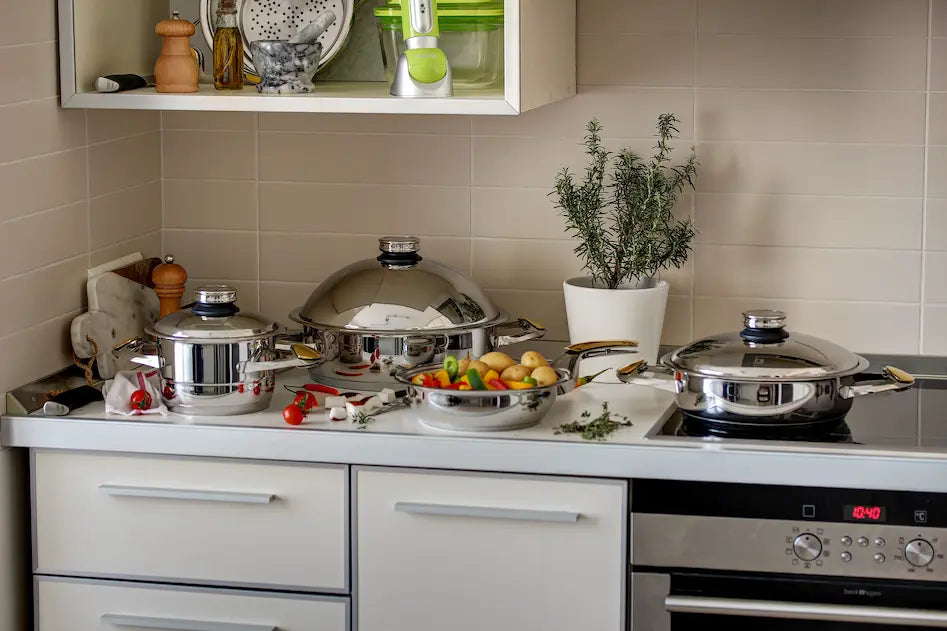


Pots and Pans Set NZ Guide for Everyday Cooking Confidence

Quick answer: A good pots and pans set should cover the meals you cook most often, fit your hob, feel balanced in the hand and be simple to clean. For most NZ kitchens, we recommend starting with a durable stainless steel pot, a mid-size casserole or saute piece, a reliable frying pan and lids that seal well. From there, add specialist pieces only when they solve a real cooking need.
Buying a full cookware set can feel efficient, but the best set is not always the one with the highest piece count. It is the one you will actually use. Some sets count lids as separate pieces, some include duplicates, and some miss the one pan you reach for every week. This guide helps you choose a practical, long-lasting set without cluttering your cupboards.
At Zepter Kitchen, we see a pots and pans set as a cooking system. Our Zepter Masterpiece Cookware collection is designed for shoppers who want premium pieces they can build around, while our cookware sets collection helps you compare ready-made options for everyday NZ cooking.
What should a good pots and pans set include?
A useful starter set should include enough variety for boiling, simmering, sauteing, frying and batch cooking. For a one to two person home, that may mean three or four hard-working pieces. For a family kitchen, it may mean larger pots, a bigger frying pan and a casserole that can handle weeknight meals as well as weekend cooking.
Core pieces to prioritise
- Small or medium pot: Useful for rice, eggs, sauces, porridge and small portions.
- Larger pot: Better for pasta, soups, stocks, corn, potatoes and batch meals.
- Frying pan: Essential for eggs, fish, vegetables, pancakes and searing.
- Casserole or saute pan: Helpful for sauces, one-pan dinners and dishes that need more depth.
- Well-fitting lids: Important for simmering, steaming, heat control and reducing splatter.
When showcasing our Zepter Masterpiece Cookware, we like to build a set around pieces that earn their place. A 5.0 litre Zepter pot gives you useful capacity for pasta, soups and family cooking, while a 24 cm URA frying pan with lid adds day-to-day flexibility for frying, sauteing and covered cooking.
How to choose the right set for your NZ kitchen
Start with your hob
Before you compare sizes or finishes, check your cooktop. Induction hobs need cookware with a compatible magnetic base that sits flat and makes good contact with the cooking zone. Gas and electric hobs are more forgiving, but flat, stable bases still help with heat control and even cooking.
Choose materials for how you cook
Stainless steel is a strong choice for buyers who want durability, versatility and a polished look. Non-stick surfaces can be useful for delicate foods, but they need gentler tools and careful heat management. Cast iron can hold heat well, but it is heavier and needs different care. The right answer depends on your cooking style, not just the material name.
Check handle comfort and lid fit
Lift each pot in the size you would actually use. A handle that feels comfortable when empty may feel different when the pot is full. Lids should sit neatly, be easy to grip and match the cooking style you prefer. A lid that fits well can help with simmering, steaming and keeping moisture in the pan.
Avoid paying for pieces you will not use
A big box set can look like better value, but unused pieces make it harder to store and clean your kitchen. We recommend choosing fewer, better pieces first, then adding a wok, steamer, strainer or specialist lid once you know you need it.
Zepter Masterpiece Cookware set ideas
For a compact starter build, we would combine one everyday pot, one larger pot or casserole, one frying pan and a matching lid system. For a family build, add a larger capacity pot and a deeper casserole. For confident home cooks, consider adding a wok, steamer insert or strainer to make the set more flexible.
- Everyday starter: One medium pot, one frying pan with lid and one casserole.
- Family kitchen: Medium pot, large pot, frying pan, casserole and a steamer or strainer.
- Batch cooking: Larger pot, deep casserole, lid options and a durable frying pan.
- Induction upgrade: Flat-base cookware selected for compatibility with your hob.
Care and cleaning tips
Good cookware lasts longer when you match the cleaning method to the material. Let hot cookware cool before washing, because sudden temperature changes can encourage warping. Use non-abrasive tools for everyday cleaning and dry pieces before storing to reduce water spots.
For stainless steel, warm soapy water and a soft sponge are a sensible starting point. If food sticks, soak the pan once it has cooled, then clean gently. Add salt after water is hot rather than leaving salt sitting on a cold stainless surface. For non-stick cookware, avoid high heat, metal tools and harsh scrubbers unless the product instructions say otherwise.
Common mistakes to avoid
- Buying by piece count alone: A 10 piece set may include lids and fillers rather than more useful cookware.
- Ignoring hob compatibility: This matters most for induction kitchens.
- Choosing sizes too small: A cramped pan steams food instead of browning it.
- Overheating empty pans: Heat cookware gradually and follow the product care guide.
- Stacking without protection: Use soft separators if surfaces may scratch.
FAQs
Is cookware set dishwasher-safe or does it need hand-washing?
Some cookware sets are labelled dishwasher-safe, but we still recommend checking the care instructions for each material. Hand-washing is often the safer choice for preserving shine, handles, lids and non-stick surfaces.
Is cookware set oven-safe, and what temperatures should I watch for?
Oven safety depends on the pan body, handles, lid and any coating. Check the stated oven-safe temperature for the exact product and remember that glass lids, silicone parts and detachable handles may have different limits.
What should I look for when buying cookware set?
Look for hob compatibility, useful sizes, durable materials, comfortable handles, well-fitting lids and pieces that match the meals you cook most. Avoid choosing by piece count alone.
How do I clean and care for cookware set?
Let cookware cool before washing, use warm soapy water for everyday cleaning, avoid harsh abrasives unless approved and dry pieces before storage. Follow the care guide for stainless steel, non-stick, cast iron or coated cookware.
How do I choose the right size of cookware set?
Match the set to your household size, hob size and cooking habits. Smaller homes may need fewer pieces, while family kitchens usually benefit from a larger pot, a deeper casserole and a bigger frying pan.
How long should good-quality cookware set last?
Good-quality cookware can last for many years when it is used on suitable heat, cleaned correctly and stored with care. Lifespan depends on the material, construction, coating and how often it is used.
Are there common mistakes people make with cookware set?
Yes. Common mistakes include buying too many pieces, ignoring induction compatibility, overheating pans, using metal tools on delicate surfaces and stacking cookware without protection.
What pieces should a good cookware set include?
A good cookware set usually includes a medium pot, a larger pot, a frying pan, a casserole or saute pan and lids. Optional extras include steamers, strainers, woks and specialist lids.
How do I avoid warping or hot spots with cookware set?
Use cookware that fits the hob zone, heat it gradually, avoid sudden temperature changes and choose pieces with stable, flat bases. Do not rinse a very hot pan under cold water.
Next steps
- Read our pot and pan set guide for NZ kitchens
- Compare stainless steel cookware for NZ homes
- Check induction cookware options before you buy
- Browse frying pans for everyday cooking