


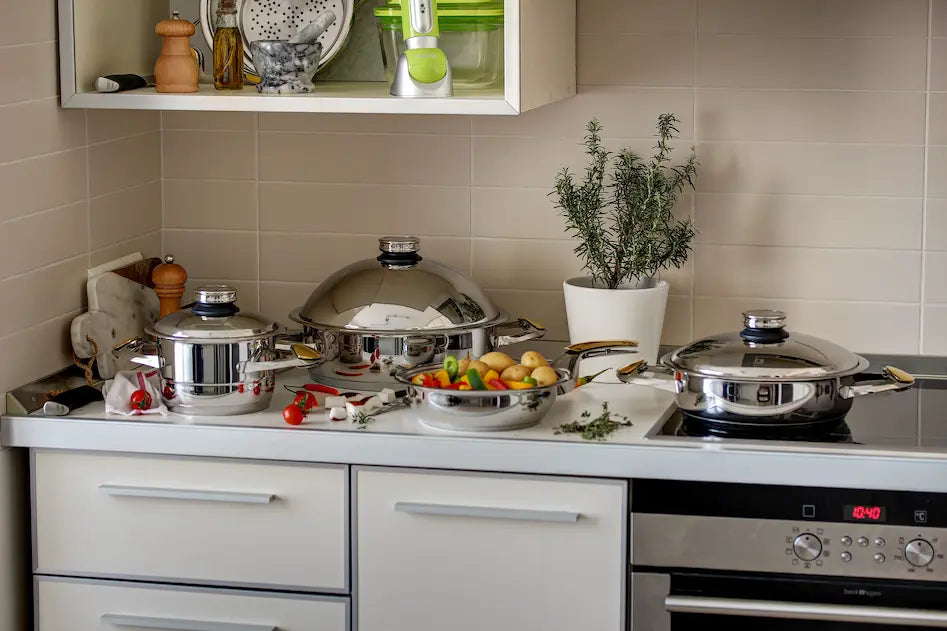


Cookware for Induction Cooktop (NZ): How to Choose Pots & Pans That Actually Work

Quick answer: For an induction cooktop, you need cookware with a magnetic base (a magnet should “stick”), a flat bottom, and the right diameter for your hob zone. Magnetic stainless steel, cast iron, and carbon steel usually work well. Aluminium, copper, and glass only work if they have an induction-ready magnetic layer bonded to the base.
Induction cooking is fast, responsive, and energy-efficient - but it can be picky about cookware. If you’ve searched for cookware for induction cooktop in NZ, this guide will help you choose pots and pans that actually work, avoid common mistakes, and buy a set that fits your cooking style.
If you’re shopping now, we recommend starting with a quality set from our cookware sets or choosing one reliable daily pan like the 28cm frying pan (with lid).
How induction cooktops work (why cookware matters)
Induction cooktops heat the pan, not the glass surface. Under the glass is a coil that creates a changing magnetic field. If your pan base is magnetic, that field induces electrical currents in the metal, which produces heat in the cookware itself.
That’s why induction is so quick - and why a non-magnetic pan simply won’t heat.
How to tell if cookware is induction-compatible
1) The magnet test (fastest check)
Place a fridge magnet on the bottom of the pot or pan. If it sticks firmly, the cookware is usually induction-compatible. If it barely clings or falls off, it may not work reliably (or at all) on induction.
2) Look for the induction symbol
Many brands mark induction-ready cookware with a coil-like symbol on the base or packaging. It’s a helpful shortcut, but we still see the magnet test as the most practical “real world” check.
3) Check the base shape
Induction needs good contact. A pan with a warped base can heat unevenly or trigger the cooktop to cycle on and off.
Best cookware materials for induction
Material affects compatibility, heating behaviour, and day-to-day feel. Here’s what we see work well for most NZ kitchens.
Magnetic stainless steel (common “best all-rounder”)
Good stainless steel cookware with a magnetic base (often a layered/clad construction) is durable, easy to maintain, and works across induction and other cooktops. If you like browning and deglazing, stainless is usually a strong choice.
Cast iron (excellent heat retention)
Cast iron is naturally magnetic and holds heat extremely well. It’s great for searing and steady simmering, but it’s heavy and can scratch glass if dragged. If you use cast iron on induction, we recommend lifting rather than sliding, and keeping the base clean.
Carbon steel (great for high-heat cooking)
Carbon steel is also magnetic and can be a brilliant “workhorse” pan once seasoned. It heats fast and sears well, but it needs a little care to prevent rust and maintain seasoning.
Aluminium or copper (only if induction-ready)
Pure aluminium and copper are not magnetic, so they won’t work on induction unless they have an added magnetic layer (often stainless steel) bonded to the base. If you love how aluminium cooks, look for “induction-ready” constructions rather than assuming it will work.
What to look for when buying induction cookware in NZ
Flat base + stable contact
Induction performance drops quickly if the base doesn’t sit flat. This matters even more for larger frying pans.
Right diameter for your zone
Many induction hobs have a minimum pan size they can detect. If your pan is too small for the zone, it may not heat consistently. Match your most-used pan sizes to your cooktop’s common zones.
Weight and comfort
Heavier pans often feel more stable and can reduce “hot spot” behaviour, but they’re harder to handle. Think about who cooks in your home and what’s comfortable day-to-day.
Lids, handles, and oven safety
Check lid fit, handle grip, and whether the pan is oven-safe (and to what temperature). These details matter more than most specs lists.
Induction cookware sets vs buying pieces one-by-one
Both approaches can work. We usually recommend:
- Buy a set if you’re outfitting a new kitchen or want consistent lids and stackability. Start with our cookware sets collection.
- Buy key pieces if you already cook with a favourite style. For many people, that’s one everyday frying pan plus one medium pot.
Common induction cookware problems (and simple fixes)
My cooktop keeps beeping or turning off
This often happens when the pan isn’t being detected (too small, not magnetic enough) or the base isn’t making stable contact. Try a different zone, ensure the base is clean and dry, and test with a clearly induction-ready pan.
It makes a buzzing noise
Some buzzing is normal with induction, especially at higher power settings or with certain pan constructions. If it’s excessive, try a different pan, avoid running an empty pan, and check that the pan base is flat.
My glass top is getting marks
Glass can mark from tiny grit under a pan. Wipe the cooktop and pan base before cooking, lift rather than slide heavy cookware, and avoid dragging cast iron.
Care tips for induction cookware
- Keep bases clean: grit is the main scratch culprit on glass.
- Avoid overheating empty pans: induction can heat very fast.
- Use the right cleaner: for stainless, gentle cleaners and non-abrasive pads help preserve finish.
- Dry thoroughly: especially for carbon steel and cast iron to help prevent rust.
FAQs
What cookware works on an induction cooktop?
Cookware with a magnetic base works on induction. Magnetic stainless steel, cast iron, and carbon steel usually work well. Aluminium or copper only work if they have an induction-ready magnetic layer bonded to the base.
How do I know if a pan is induction-compatible?
Do the magnet test: if a magnet sticks firmly to the base, the pan is usually induction-compatible. You can also look for an induction coil symbol on the base or packaging.
Does stainless steel work on induction?
Many stainless steel pans work on induction, but not all. Stainless needs a magnetic base (often a layered/clad base). If a magnet sticks to the bottom, it’s a good sign it will work.
Why won’t my induction cooktop detect my pan?
Common reasons are: the pan base isn’t magnetic enough, the pan is too small for the zone, or the base is warped so it isn’t making stable contact. Testing with a known induction-ready pan can help confirm the issue.
Can I use cast iron on an induction cooktop?
Yes, cast iron is induction-compatible and holds heat very well. To protect glass cooktops, keep the base clean and lift the pan rather than sliding it.
Is non-stick cookware okay for induction?
Non-stick cookware can work on induction if it has an induction-compatible (magnetic) base. The key is compatibility and base flatness, not whether it’s non-stick.
Do I need special induction cookware?
You don’t need “special” cookware, but you do need cookware that’s induction-compatible. If your existing pans pass the magnet test and sit flat, they’ll usually work fine.
What’s the best induction cookware set to buy in NZ?
The best set is one that matches your cooktop size, includes the pieces you’ll actually use, and has a durable magnetic base. For many households, a set with a medium pot, a larger pot, and a versatile frying pan is a practical starting point.
Next steps
- Shop cookware sets
- Shop frying pans
- View the 28cm frying pan (with lid)
- Read: Cookware secret (care + cooking tips)
- Induction cooktop pans: what to buy
- Induction ready cookware: what it means
- Induction hob cookware: compatibility guide
- Stainless steel cookware: NZ buying guide
- Is it healthy to cook with stainless steel pans?