


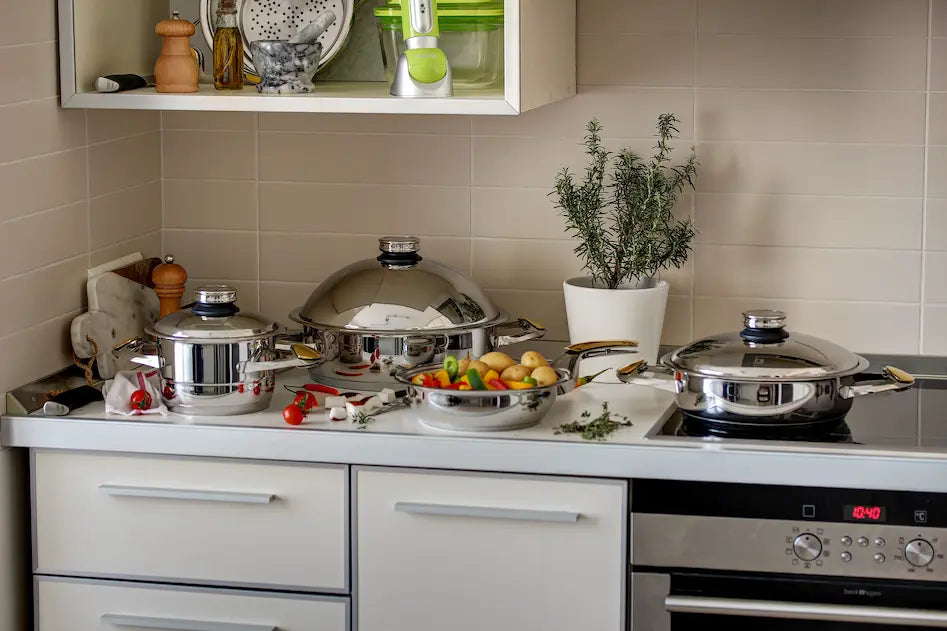


Casserole Pot NZ: Why the Wide, Lidded Shape Works So Well for Everyday Cooking

Two pots can hold almost the same amount and still feel completely different once dinner gets moving. One gives you room to soften onions, spread out chicken pieces, stir a risotto and then add enough liquid to finish gently. Another feels crowded the moment the spoon goes in.
That is why a casserole pot is worth choosing by shape, not litres alone. For anyone comparing a casserole pot NZ option, the useful combination is a broad working base, moderate walls that keep a mixed meal contained, and a fitted lid that lets you move from active cooking into a steadier covered finish.
We like this format because it sits comfortably between several everyday jobs. You can start a sauce, brown ingredients, build a curry or stew, cook grains, simmer a one-pot meal and bring the lid into play without changing vessels. That versatility is also why casserole shapes are an important part of our MasterPiece Cookware collection.
Choosing a casserole pot NZ cooks can work with starts at the base
The base is where the casserole earns much of its usefulness. A wider working surface gives you easier access to the ingredients, especially at the start of a meal when you are softening vegetables, warming spices, beginning a sauce or arranging pieces of food so they are not piled on top of one another.
That room matters for browning too. When ingredients can make good contact with the cooking surface, you have more control over colour and texture before adding stock, tomatoes, coconut milk or another cooking liquid. You are not trying to turn the casserole into a frying pan. You are simply using the base well before the meal becomes wetter and more contained.
The same easy access helps with foods that need regular movement. Risotto needs stirring. Curry needs space for the spoon to travel through the sauce without ingredients climbing over the rim. A bolognese or braise often begins with several ingredients added in stages. A useful casserole base gives those early steps room to happen naturally.
What the walls change
Once liquid, vegetables, grains or larger pieces of food go in, wall height starts to matter. A casserole typically gives you enough height to contain a mixed meal without making the pot feel deep and awkward to work in.
Moderate walls are especially pleasant when you want to stir from the bottom, turn pieces over or scrape around the sides. You can see what is happening without reaching down into a very tall vessel, yet there is still enough containment for a simmering curry, tomato sauce, risotto, stew or generous vegetable dish.
This is one reason a stainless steel casserole pot NZ cooks can use regularly often feels more versatile than its capacity number suggests. The litre figure tells you how much the pot can hold. The proportions tell you how comfortably you can actually cook in it.
Why a casserole pot with lid changes the way you cook
The lid is not just there for storage or serving. It changes what happens inside the pot.
Once the first stage of cooking is done and moisture is present, a fitted lid helps contain heat and steam. That makes it easier to move from active browning or sautéing into gentler covered cooking. Sauces can simmer more steadily, grains can cook with less evaporation, and stews can spend more time cooking in a contained environment rather than constantly losing moisture to the room.
With MasterPiece, this lid-on stage is part of the way we think about controlled cooking. The aim is not to keep the hob turned up simply because the meal is covered. Once the contents are active, lower heat can often maintain the cooking process more calmly. If you want the detailed technique, our low-heat cooking guide for MasterPiece cookware goes deeper into how to manage heat without repeatedly lifting the lid.
A quick safety note: gentler heat is still cooking, not a shortcut around food safety. Poultry, minced meat, seafood and reheated foods need to be cooked or reheated thoroughly. New Zealand Food Safety recommends checking safe cooking temperatures where appropriate and reheating leftovers until piping hot.
What the base, walls and lid are doing together in our MasterPiece casserole
Our MasterPiece casserole takes the shape advantages above and supports them with construction designed for controlled everyday cooking. The current 4L/24cm and 5L/28cm casseroles we offer are Made in Italy and use AISI 316L-304 steel. We choose this kind of robust stainless steel construction because a hard-working casserole should be something you can brown in, simmer in, stir in and keep reaching for over years of cooking.
Underneath, the Accuthermal Compact Bottom uses a three-layer construction designed to take in, spread and hold heat through the base. That matters because the wide working surface is only useful if you can manage heat across it with confidence. Once the meal has come up to temperature, the substantial base also works with lower hob settings for steadier cooking.
At the top, the fitted lid and pot edge support our Closed Circle concept. Steam rises, meets the cooler lid, condenses and returns to the food. In practical kitchen terms, that means the lid becomes part of moisture management rather than an afterthought. It helps you keep a covered dish contained while you reduce the heat and let the meal continue cooking.
Both the current 4L/24cm MasterPiece casserole and 5L/28cm MasterPiece casserole are supplied with Analog Thermocontrol. We like having that extra heat cue on a covered pot because it helps you pay attention to temperature without constantly lifting the lid. If you want to see how these features fit across the wider range, our MasterPiece cookware overview explains the core system.
How the casserole idea changes as capacity grows
A smaller casserole feels nimble. There is less distance across the pot, it is easy to bring to the table, and it can suit sauces, grains, vegetables, smaller curries or meals where you want the benefits of a lid without a large footprint.
Move up in size and the experience changes as well as the capacity. Our 4L/24cm casserole gives you a 24cm diameter and a 9.7cm pot height. It is broad enough to give ingredients useful working room while still feeling compact enough for many everyday meals.
The 5L/28cm casserole is wider at 28cm and listed at 9cm high. That extra width can be useful when you want more ingredients spread across the base, a larger batch of curry or risotto, or more room to turn and stir before the lid goes on. The point is not that one capacity belongs to one household size. It is that the shape changes how the available litres feel while you are cooking.
The wider MasterPiece casserole and cookware range lets you choose around the amount of food you normally make and the space you like to have around it. If you often wish your spoon had more room to move, width can matter just as much as another litre on the label.
When another cookware shape makes more sense
A casserole is versatile, but it does not need to do every kitchen job.
If your main task is boiling a large volume of pasta, making stock, cooking a big pot of soup or preparing a substantial batch, a taller pot can give you more vertical capacity and useful headroom. Our stock pot size guide looks at those larger-volume jobs in more detail.
If exposed surface area is the priority and you do not need a covered finish, an open frying pan may be the more natural tool. Think quick sautéing, fast evaporation or cooking where access to the whole surface matters more than containment.
And if you are making a small sauce, porridge or another modest quantity where a single long handle feels convenient, a saucepan may be easier to lift and pour from. The casserole makes the strongest case when you want a broad base, enough wall height for a mixed meal and a lid that lets the same pot move into covered cooking.
Why this shape earns a place in an everyday kitchen
Base area, wall height and the lid are simple details, but together they explain why the casserole format is so useful. The base gives you working room. The walls keep the meal contained without making it awkward to stir. The lid gives you control over heat and moisture when the cooking moves into a gentler stage.
That is exactly why we keep casseroles in our MasterPiece range. They suit the kind of cooking many of us actually do: start with ingredients in the base, build flavour, add moisture, cover, lower the heat and let the dish come together in one substantial piece of cookware.
If that sounds like the way you cook, explore the Zepter MasterPiece Cookware collection and compare the casserole formats with the pots and pans you already use most.
Common questions about casserole pots
What is a casserole pot used for?
A casserole pot is used for meals that benefit from a broad cooking surface, enough wall height to contain ingredients and a lid for covered cooking. Common casserole pot uses include curries, stews, risotto, pasta sauces, grains, vegetables, braises and one-pot meals that may begin with browning before liquid is added.
What is the difference between a casserole pot and a stock pot?
A casserole pot is generally wider and lower, giving you easier access to the cooking surface for browning, stirring and arranging ingredients. A stock pot is typically taller and is better suited to large volumes of pasta water, stock, soup and batch cooking where vertical capacity and headroom matter more.
What is the difference between a casserole pot and a saucepan?
In everyday cookware terms, a saucepan is usually smaller, narrower and fitted with one long handle, which makes it convenient for sauces, grains and smaller quantities. A casserole is usually broader with two side handles and a lid, giving you more working surface for mixed meals and covered cooking.
Can a casserole pot go in the oven?
Oven suitability depends on the exact casserole and every part attached to it. The current 4L/24cm and 5L/28cm MasterPiece casseroles are listed as suitable for oven use, but their Thermocontrol must not go into the oven. Check the instructions for your exact piece and remove any oven-incompatible components before transferring it.
Is stainless steel good for a casserole pot?
Yes, stainless steel is a strong material for a casserole pot because it is durable, versatile and well suited to browning, simmering and covered cooking. Performance also depends on the base construction and heat technique. Our current 4L/24cm and 5L/28cm MasterPiece casseroles use AISI 316L-304 steel with an Accuthermal Compact Bottom.
What size casserole pot suits family meals?
There is no single family size that works for everyone. Choose enough capacity for the amount you normally cook, then look at width and stirring room as well as litres. A 4L/24cm casserole gives a more compact footprint, while a 5L/28cm format gives you more width and capacity for larger mixed meals.
Can you brown food in a casserole pot?
Yes. A broad casserole base can work well for browning vegetables, meat or other ingredients before you add liquid. Use controlled heat, avoid overcrowding the surface and give food time to develop colour before stirring or turning it.
Why does a casserole pot have a lid?
The lid helps contain heat and moisture, which is useful when a dish moves from active cooking into a gentler simmer or braise. A fitted lid can reduce evaporation and help keep the cooking environment steady while sauces, grains, stews and other covered dishes finish.