


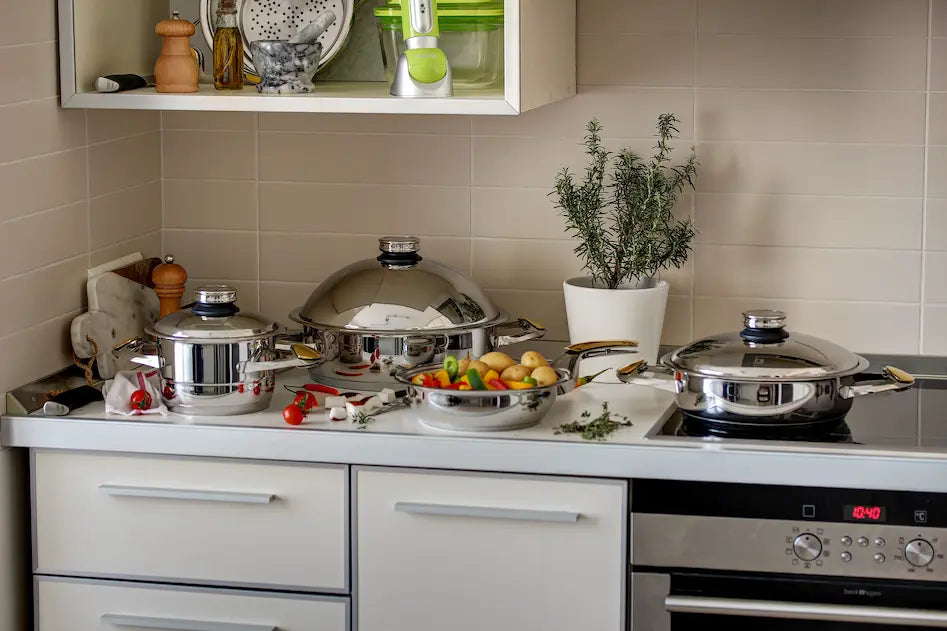


Stainless steel cookware in NZ: how to choose, cook with it, and keep it looking new

Quick answer: The best stainless steel cookware for most NZ kitchens is fully-clad (tri-ply or 5-ply) or a heavy disc-base design, with an induction-compatible base, tight-fitting lids, and riveted handles. Look for clear material details like 18/10 or 18/8 stainless on the cooking surface, and avoid ultra-thin pans that warp. For easier cooking, preheat the pan, add oil after it is warm, and let food release naturally before flipping.
Stainless steel cookware is a go-to because it is durable, oven-safe in many cases, and handles high heat better than most non-stick coatings. The trade-off is technique: stainless rewards a little know-how. In this guide we walk through what to buy, what the specs actually mean, and how to get great results day to day in a New Zealand kitchen.
If you are deciding between a set and individual pieces, start here: cookware sets. If you want premium stainless built for long-term use, explore Masterpiece cookware.
What is stainless steel cookware?
Stainless steel is an iron-based alloy designed to resist rust and corrosion. In cookware, stainless is often paired with a heat-conductive core such as aluminium or copper. That core is what helps distribute heat evenly across the base and sides.
Why stainless steel is popular
- High-heat performance: great for searing, browning, and pan sauces
- Durability: resists scratching and stands up to daily use
- Versatility: works on gas, electric, and many induction cooktops (if the base is magnetic)
- No fragile coating to baby: you can use metal utensils in most cases
Stainless steel grades explained (18/10, 18/8, 304, 316)
Cookware descriptions often mention numbers like 18/10. These usually refer to the percentage of chromium and nickel in the stainless steel. Chromium supports corrosion resistance, while nickel can improve shine and corrosion resistance in some environments.
- 18/10 (often similar to 304 stainless): common for quality cookware interiors
- 18/8: also common and generally performs similarly in kitchen use
- 316 stainless: sometimes marketed as more corrosion resistant, often at a higher price
In practice, construction and thickness usually matter more than chasing one grade number. A well-built pan that heats evenly will be easier to cook with than a thin pan made from a fancy-sounding steel.
Construction types: fully-clad vs disc-base
Fully-clad (tri-ply and multi-ply)
Fully-clad cookware has heat-conductive layers bonded through the base and up the sides. This improves side-wall heating and makes simmering and sauce work more forgiving.
- Best for: sauté pans, saucepans, and anything where you want even heating up the sides
- What to look for: a responsive core, solid rivets, and a comfortable handle shape
Disc-base (encapsulated base)
Disc-base cookware has a thick heat-conductive disc bonded to the bottom, but the sides are usually single-layer stainless. These can still be excellent, especially for stockpots and larger pieces.
- Best for: stockpots, pasta pots, large casseroles, and budget-friendly sets
- What to look for: a thick, wide base that sits flat and feels heavy for its size
Will stainless steel work on induction?
Induction needs a magnetic base. Many stainless pans are induction-ready, but not all. A simple test is whether a fridge magnet sticks firmly to the base.
If you cook on induction, these guides can help you avoid buying the wrong pan:
What to buy: the best stainless steel cookware pieces for most NZ homes
You do not need a 12-piece set to cook well. We usually see the best results when people start with a small core kit and add specialty pieces later.
Starter kit (covers most meals)
- Frypan or sauté pan (24 to 28 cm): searing, stir-fry, one-pan meals
- Medium saucepan (2 to 3 L) with lid: grains, sauces, reheating
- Large pot or stockpot (6 L+): pasta, soups, batch cooking
Nice-to-have upgrades
- Small saucepan (1 to 1.5 L): eggs, small batches, melting
- Roasting pan: meat and veg, oven meals
- Steamer insert: dumplings, veg, fish
How to cook with stainless steel without sticking
Use the warm-pan, warm-oil approach
- Preheat the pan on medium heat for 2 to 3 minutes.
- Add oil once the pan is warm, then swirl to coat.
- Add food and let it sit until it naturally releases before flipping.
Manage heat, do not chase smoke
Stainless performs best at medium to medium-high heat for most cooking. Too hot and oil can smoke quickly, too cool and food can glue itself to the surface.
Deglaze for easy clean-up
Those browned bits are flavour. After cooking, lower the heat, add a splash of water or stock, and scrape gently with a wooden utensil to lift the fond into a quick sauce.
How to clean stainless steel cookware
Everyday cleaning
Warm water, dish liquid, and a non-scratch sponge is usually enough. If you used high heat, let the pan cool before rinsing to reduce the chance of warping.
Burnt-on food
- Cover the base with water and add a small amount of baking soda.
- Simmer for 5 to 10 minutes, then turn off heat.
- Let it cool, then wipe clean and rinse well.
Rainbow stains and cloudy marks
These are common and usually cosmetic. A small amount of white vinegar on a cloth can help lift mineral deposits, then rinse and dry.
Is stainless steel cookware safe?
For most people, stainless steel cookware is considered a safe, widely used cooking surface. Tiny amounts of metals can migrate into food, especially with new cookware and very acidic cooking. If you have a known nickel sensitivity, it may be worth choosing cookware with clear material details and discussing options with a clinician if you have concerns.
Pros and cons of stainless steel cookware
Pros
- excellent browning and searing
- very durable and long-lasting
- easy to maintain once you know the basics
- often oven-safe, depending on handles and lids
Cons
- learning curve for sticking
- can show marks and discolouration (usually cosmetic)
- lighter, thinner pans may warp or heat unevenly
Buyer checklist: what to look for in stainless steel cookware
- Construction: fully-clad or a thick, stable base
- Flatness: sits flat on a bench and on the cooktop
- Handle comfort: secure grip, balanced weight
- Lid fit: snug lids reduce evaporation and help simmering
- Induction compatibility: magnet sticks firmly to the base
- Oven and dishwasher notes: check brand guidance for your model
FAQs
What is the best stainless steel cookware in NZ?
The best choice is cookware that matches your cooktop and cooking style. For many NZ homes, fully-clad tri-ply cookware or a heavy disc-base set offers the best balance of even heating and durability. Focus on build quality, thickness, and induction compatibility rather than only the grade label.
Is 18/10 stainless steel better than 18/8?
Both are widely used in quality cookware. In everyday cooking, the pan construction and thickness usually make a bigger difference than the small change in nickel content. Choose a well-built pan that heats evenly and feels stable on the cooktop.
Why does food stick to stainless steel pans?
Sticking usually happens when the pan is not preheated, the heat is too low, or food is moved too early. Preheat on medium, add oil once warm, and let food release naturally before flipping.
Does stainless steel cookware work on induction?
Only if the base is magnetic. Many stainless pans are induction-ready, but not all. A simple check is whether a fridge magnet sticks firmly to the base. If it does, it is usually compatible.
How do you clean burnt stainless steel cookware?
Simmer water with a small amount of baking soda for 5 to 10 minutes, then let it cool and wipe clean with a non-scratch sponge. For mineral haze, a little white vinegar can help, then rinse and dry.
Is stainless steel cookware safe for acidic foods?
Stainless steel is commonly used for acidic cooking. Small amounts of metals can migrate into food, especially when cookware is new and foods are very acidic. If you have a known sensitivity, choose cookware with clear material details and seek personalised advice.
Next steps
- Shop Masterpiece stainless cookware
- Compare cookware sets
- Learn about Masterpiece cookware features
- Cookware for induction cooktop guide
- Induction hob cookware guide
- Is it healthy to cook with stainless steel pans?
- What are the downsides to stainless steel cookware?
- Is stainless steel the best cookware?
- Stainless pots and pans: how to choose
- Pot and pan set: what to buy