


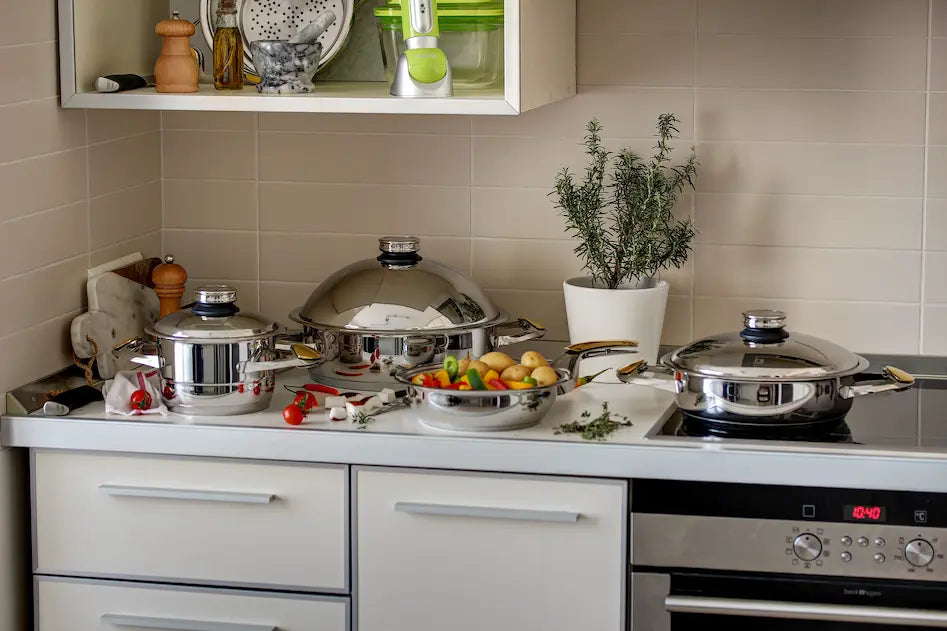


Pot and pan set NZ: the only buying checklist you need

Quick answer: For most NZ households, a practical pot and pan set is 6 to 10 pieces with at least a 24 to 28 cm frypan, a 20 to 24 cm sautepan or shallow casserole with lid, and two saucepans (about 1.5 to 2 L and 3 to 5 L). Choose a set that suits your cooktop (especially induction), prioritise comfortable handles and well fitting lids, and buy the best quality you can in the pieces you will actually use.
If you are comparing options right now, start with our cookware sets collection. If you would rather build your own set piece by piece, begin with a reliable everyday frypan like this 24 cm frying pan with lid, then add the pot sizes you use most from our pots collection.
What counts as a pot and pan set
A pot and pan set usually means a bundle of cookware pieces (often with lids) designed to cover most everyday cooking. In NZ listings, piece counts can be confusing because some brands count lids as separate pieces.
- Core pieces: saucepans, stockpot, frypan, sautepan or casserole, and matching lids.
- Optional extras: steamer inserts, strainers, spare handles, and serving pieces.
We recommend you look past the piece count and check the exact sizes and shapes included.
Choose the right set for your cooktop
Induction
Induction is common in newer NZ homes and apartments. Your cookware must be magnetic and have a flat base to work well. Stainless steel sets often suit induction, but always confirm the set is induction ready. If you want a deeper dive, see our guide: cookware for induction cooktops.
Gas, ceramic and electric coil
Most materials work on gas and conventional electric cooktops. Look for stability (no rocking), heat resistance in handles, and lids that do not rattle or warp over time.
Material options and how to pick
There is no single best cookware material, only the best match for how you cook. Here is a simple comparison to help you decide.
| Material | Why people choose it | Watch outs |
|---|---|---|
| Stainless steel | Durable, versatile, can go from hob to oven, often induction friendly. | Can stick without the right heat and oil technique. |
| Non stick | Easy for eggs, delicate foods, quick cleanup. | Coatings wear over time, avoid high heat and metal utensils. |
| Cast iron | Excellent heat retention, great for searing. | Heavy, needs care to avoid rust, not ideal for everyone as a full set. |
| Aluminium with clad base | Fast heating, often more affordable. | Not always induction compatible unless stated, can warp if thin. |
If you are leaning toward stainless, you may find this helpful: stainless steel cookware. If you are leaning toward non stick for everyday use, compare options in best non stick pans in NZ.
The 7 checks we use when comparing pot and pan sets
1) The pieces match what you cook
A bundle is only good value if you use it. Most households cook 80 percent of meals with 3 to 4 pieces. Start with the everyday sizes and add specialty pieces later.
2) Base thickness and flatness
Thicker, flatter bases help with even heating and reduce hot spots. This matters for searing and for induction efficiency.
3) Lid fit and venting
Well fitting lids help control moisture and simmering. For boiling, a small vent can reduce rattling and boil overs. Glass lids are convenient, while metal lids are often more durable.
4) Handle comfort and heat management
Look for handles that feel stable when the pan is full. If you cook on gas, keep an eye on handle shape and distance from the flame. For oven use, check the rated temperature for the whole piece, including the lid knob.
5) Cleaning and care
Dishwasher safe sounds great, but many people still hand wash to preserve finish and coatings. If you want low effort cleanup, plan for at least one non stick frypan alongside durable stainless pots.
6) Storage and stacking
NZ kitchens vary, and apartment storage can be tight. Nesting sets save space, but be sure the pieces do not scratch each other or rely on flimsy protectors.
7) Warranty and spare parts
Good cookware should be supported with replacement lids or handles. Check what is available locally in NZ, including how warranty claims are handled.
Suggested set builds
Starter set for 1 to 2 people
- 1.5 to 2 L saucepan with lid
- 3 to 5 L pot with lid
- 24 to 26 cm frypan (lid optional)
Everyday family set
- 1.5 to 2 L saucepan with lid
- 3 to 5 L saucepan or small pot with lid
- 6 to 9 L stockpot with lid
- 28 cm frypan
- 24 cm sautepan or shallow casserole with lid
Serious home cook set
- Two saucepans (1.5 to 2 L and 3 to 5 L)
- Stockpot (8 to 12 L)
- Two frypans (one non stick, one stainless)
- Sautepan, plus a Dutch oven or casserole
Common mistakes to avoid when buying a set
- Buying for the piece count: a 12 piece set that duplicates sizes can be worse value than a 7 piece set you use daily.
- Ignoring weight: heavier pieces can feel premium, but make sure you can comfortably lift a full pot safely.
- Overbuying non stick: coatings can be great, but they are a wear item. Many people prefer durable stainless for most pots, plus one or two non stick pieces.
- Not checking oven limits: lids and handle materials can set the real temperature limit, not the pan body.
- Skipping cooktop checks: induction needs magnetic, flat bases. Some sets are mixed, so confirm each piece.
How to compare value in NZ
Prices vary widely across NZ retailers, especially during seasonal sales. To compare fairly, we suggest you cost it out by the pieces you will use most and the construction quality rather than the headline discount.
- Look for multi layer or encapsulated bases if you want more even heating on electric and induction.
- Check what is included in writing: sizes (cm and litres), number of lids, and any inserts.
- Factor in longevity: if you replace a cheap frypan yearly, a better quality piece can cost less over time.
- Spare parts: replacement lids and knobs can extend the life of a set.
Care tips that keep a set looking new
Stainless steel care
For stuck on bits, soak with warm water and a little dish liquid before scrubbing. If you get rainbow heat tint, it is usually cosmetic and can often be reduced with a mild acid cleaner and a soft cloth. Avoid harsh abrasives that scratch the finish.
Non stick care
Hand washing with a soft sponge is gentler than the dishwasher. Store pans with a cloth or protector between them to reduce surface scuffs. If food starts sticking where it did not before, it may be time to retire that piece.
Warping and thermal shock
Rapid temperature changes can warp thinner pans. Let cookware cool before rinsing under cold water, and try not to leave an empty pan heating unattended.
Tips for cooking well with stainless and non stick
How to reduce sticking on stainless
- Preheat the pan for a minute or two, then add oil and let it shimmer.
- Pat proteins dry and avoid overcrowding.
- Let food release naturally before flipping.
How to extend non stick life
- Keep heat moderate, especially on induction where pans heat fast.
- Use silicone or wooden utensils.
- Let the pan cool before rinsing to avoid thermal shock.
Quick checklist before you click buy
- Does each piece state it is compatible with your cooktop, especially induction?
- Are the key sizes included (frypan diameter and pot litres), not just a piece count?
- Do the lids fit the pieces you will use most?
- Is the handle comfortable for your grip and storage?
- Is there a clear warranty and local NZ support?
If you are undecided, we suggest starting with one great pan and one great pot, then expanding. That approach often beats buying a large set and discovering half the pieces do not suit your cooking style.
FAQs
What size pot and pan set is best for a small NZ kitchen?
A compact 6 to 8 piece set usually works best. Prioritise one frypan (24 to 26 cm), one medium pot (3 to 5 L), and one small saucepan (1.5 to 2 L). Add a stockpot later only if you regularly cook pasta, soups, or batch meals.
Is stainless steel or non stick better for everyday cooking?
Stainless is the most versatile for browning and long term durability, while non stick is convenient for delicate foods and quick cleanup. Many NZ kitchens do best with stainless pots plus one quality non stick frypan for daily use.
Can I use a pot and pan set on induction in New Zealand?
Yes, as long as the set is induction ready and the base is magnetic and flat. If the listing does not explicitly mention induction, test with a fridge magnet or choose a set that clearly states induction compatibility.
What should I look for in lids and handles?
Choose lids that sit flat and do not rattle, with knobs that stay secure over time. Handles should feel balanced when the pot is full and be rated for the temperatures you plan to use, including oven use if that matters to you.
How do I stop stainless pans from sticking?
Use the right heat and oil method: preheat, add oil, then add food once the oil shimmers. Avoid moving food too early, and let it release naturally before turning.
How many pieces do I actually need in a starter set?
Most people can cover everyday meals with 3 to 5 core pieces and a couple of lids. If you are buying a larger bundle, make sure it includes your most used sizes rather than duplicates you will rarely reach for.
Next steps
- Shop cookware sets
- Browse frying pans
- Browse pots
- Cookware for induction cooktops
- Stainless steel cookware
- Pots and pans set
- Pot set
- Kitchen pots and pans set